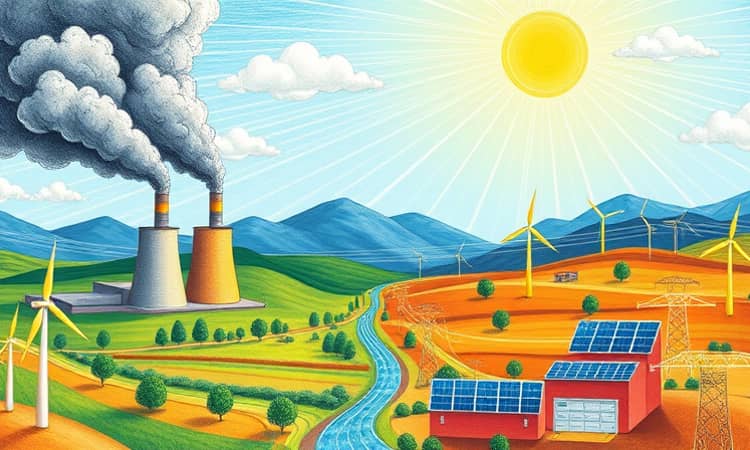
Global energy markets are at a historic crossroads. Driven by both necessity and ambition, billions of dollars are shifting from coal and oil toward renewable power, storage systems, and electrification technologies. For investors seeking purpose alongside profit, this moment offers unprecedented opportunity. By understanding key trends and adopting practical strategies, you can align your portfolio with the future of energy.
Global Investments: A Tipping Point
In 2025, total energy investment soared to a record-breaking $3.3 trillion total, with roughly $2.2 trillion directed into clean energy solutions. This marked not only a financial milestone but a vote of confidence in technologies that can reshape our planet. Renewables, electric vehicles, upgraded grids, advanced storage, efficiency measures, and clean fuels now command two-thirds of global funding.
The United States led capacity additions, with renewables accounting for 93% of capacity additions through September 2025. Solar and storage represented 83% of that growth, concentrated in sun-drenched states like California, Texas, and Arizona. Battery storage installations reached 37.4 GW operating capacity by October 2025, a 32% year-over-year growth in storage, and another 19 GW under construction to reach 56 GW by 2026.
Globally, renewables and nuclear have now avoided 1,371 exajoules of fossil fuel consumption since 2010, preventing roughly 110 Gt of CO₂ emissions. Asia Pacific, led by China’s massive rollout, accounted for 43% of avoided fossil use in 2024. These figures illustrate a profound shift: clean power is no longer a niche—it is quickly becoming the backbone of energy supply.
Clean Energy Growth and Technological Advances
Renewable deployment continues at breakneck speed. In 2025, China alone added 390 GW of solar capacity (56% of the global total) and 86 GW of wind (60% share), outpacing new demand for electricity in the first half of the year. The United States forecasts 69 GW of solar additions and a 21% rise in solar generation over 2026–2027.
Innovation is amplifying impact. Floating solar installations on reservoirs increase efficiency, while AI-driven grid optimization smooths fluctuations in output. Electrification is accelerating across transport, industry, and buildings, especially in markets like China that embrace large-scale manufacturing of batteries and electrolyzers.
- Hybrid power purchase agreements combining wind, solar, and battery storage
- Decentralized energy systems for local resilience
- Advanced materials improving module efficiency and longevity
Meanwhile, competitive pricing reshapes markets. In Spain, solar and wind pushed wholesale electricity prices 32% below the EU average in the first half of 2025, displacing gas and coal generation. As costs fall, clean technologies transition from subsidies to self-sustaining, market-driven growth.
Regional Dynamics and Strategic Competition
Energy transformation is as much a geopolitical contest as a commercial one. Industrial policies—subsidies, local content rules, factory incentives—are overtaking traditional energy regulations. Leadership in clean energy supply chains defines economic power for decades to come.
These dynamics underscore the need for investors to consider national competitive advantages. Countries backing robust supply chains, efficient permitting, and grid upgrades will capture the bulk of future investment returns.
Practical Insights for Investors
With markets in flux, how can you navigate risk and maximize impact? First, diversify across subsectors. While solar and wind remain growth pillars, storage, grid modernization, hydrogen production, and energy efficiency present compelling niches.
- Balance core renewable stocks with emerging technologies like green hydrogen and carbon capture.
- Allocate to infrastructure funds that underwrite grid upgrades and transmission corridors.
- Consider private equity or venture capital for early-stage clean tech with high growth potential.
Secondly, keep an eye on policy trajectories. Subsidy curves, tax credits, and trade measures can rapidly reshape competitive landscapes. Lastly, measure impact. Environmental, social, and governance (ESG) frameworks are maturing—seek funds and companies that transparently report emissions reductions, local job creation, and community engagement.
Risks remain, from grid interconnection delays to potential policy reversals in key markets. Yet instead of retreating, adopt an abundance mindset over net-zero rhetoric—focus on building capacity rather than solely offsetting emissions.
2026 Outlook and Action Plan
As we look to 2026, three demand drivers stand out: AI data centers hungry for clean, round-the-clock power; rapid electrification of transport and industry; and reshoring of manufacturing to enhance supply chain resilience. Grids are the pivotal bottleneck—investors who support grid expansions and digital upgrades stand to benefit disproportionately.
- Accelerate investments in smart grid technologies to enable real-time balancing.
- Back corporate offtake agreements that guarantee revenue streams for clean generators.
- Fund modular, off-grid solutions for developing markets with underserved populations.
Competition will pivot from climate rhetoric to energy security and resilience. Nations and companies that execute swiftly on factories, ports, and transmission corridors will lock in advantage. In this "energy addition" phase, every new megawatt of clean capacity strengthens local economies, enhances air quality, and reduces consumer bills.
For investors, the mantra is clear: speed matters most, then cost, then carbon. Prioritize projects that can be commissioned quickly, offer competitive returns, and deliver measurable social and environmental benefits.
Conclusion
The transition from fossil fuels to clean energy is not a distant vision—it is unfolding now. With over $2.2 trillion funneled into renewables and related technologies in 2025 alone, momentum is undeniable. By blending strategic diversification, policy insight, and an urgency mindset, investors can both capture financial returns and accelerate a more sustainable world.
This is your invitation to join the energy evolution. Align your capital with innovation, resilience, and global progress, and become part of the historic shift that will define our century.