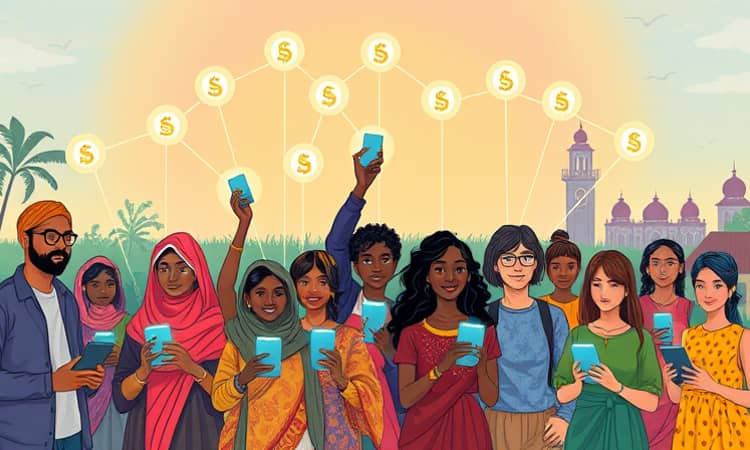
In an era where technology shapes opportunity, the promise of financial inclusion through fintech has never been more vital. By leveraging innovation, we can empower underserved communities, ignite economic growth, and ensure that no one is left behind.
Emerging Market Dynamics
By 2032, the global fintech market is projected to exceed $1 trillion by 2032, driven by innovation across payments, lending, and digital assets. In 2026, digital payments and fintech services worldwide are expected to reach $48 billion, showcasing double-digit growth rates in payments as networks shift from cards to account-to-account transactions.
Meanwhile, the AI in fintech sector is forecasted at $41.16 billion by 2030, underpinned by AI-powered hyper-personalization in banking and advanced fraud prevention tools. Digital asset treasuries are also on the rise, digital asset treasuries expected to surpass $250 billion in assets by the end of 2026, up 130% from 2025 levels. These figures reflect a broader shift toward real-time, data-driven finance platforms that cater to a mobile-first generation demanding seamless service.
Understanding the Digital Divide
Despite global internet penetration of 73.2%, over 2.2 billion people remain offline. Urban regions boast 86.5% connectivity, while rural areas lag at 54.5%. A 7% gender gap persists, with 240 million fewer women online than men. These disparities translate directly into unequal access to digital financial services.
In the United States, broadband adoption varies dramatically by income and ethnicity. Only 57% of households earning less than $30,000 have broadband, compared to 95% of high-income families. Black and Hispanic communities report smartphone-only internet reliance rates of 19% and 22%, respectively, versus 12% among white households. Seniors, tribal lands, and low-income rural ZIP codes face the greatest exclusion, underscoring the urgent need for targeted solutions.
Fintech’s Role in Fostering Inclusion
Fintech innovations are uniquely positioned to bridge these gaps by embedding financial infrastructure directly into everyday applications. When designed thoughtfully, these solutions can:
- Provide instant, low-cost transfers via mobile wallets and P2P platforms
- Offer Buy Now, Pay Later (BNPL) options to spread out essential purchases without high-interest debt
- Enable open finance APIs for seamless data sharing between banks, apps, and service providers
- Leverage AI-driven credit scoring to extend fair lending to underserved borrowers
By prioritizing user-centric design and localized partnerships, fintechs can unlock financial access where traditional banks may not reach.
2026 Trends and Future Outlook
As we approach 2026, several trends will redefine inclusion in fintech. Agentic AI agents will handle routine transactions, while stablecoins and digital assets gain traction in treasury management.
- Consolidation accelerates: increased M&A among banks and crypto firms, particularly to capture younger demographics.
- Regulatory gaps persist: open banking in the U.S. lags behind Europe, challenging cross-border interoperability.
- System stability demands: 37% of retailers report stability concerns, driving demand for unified payment platforms.
- Broadband expansion: 32 states advanced affordability initiatives in late 2024, boosting rural connectivity.
These developments present both challenges and opportunities. Fintechs that embed robust security, deliver hyper-personalized experiences, and foster collaborative ecosystems will emerge as leaders in inclusive finance.
Stakeholder Impacts and Strategic Actions
To translate ambition into action, stakeholders must align on priorities. Below is a summary of the most affected groups, their core challenges, and how fintech interventions can drive change.
By collaborating across public and private sectors, we can mobilize the estimated $2.6 to $2.8 trillion needed globally to close the digital divide. Education initiatives, device subsidies, and skill-building programs will further empower citizens to embrace the digital economy.
Conclusion: A Call to Collective Action
Fintech’s evolution offers a once-in-a-generation opportunity to democratize financial services. By focusing on user-centric solutions, fostering cross-sector collaboration, and committing to equitable access, we can create a more inclusive financial system.
Let us harness innovation to uplift rural villages, strengthen low-income neighborhoods, and modernize traditional institutions. Together, we can bridge the digital divide and pave the way for a future where everyone can participate fully in the global economy.