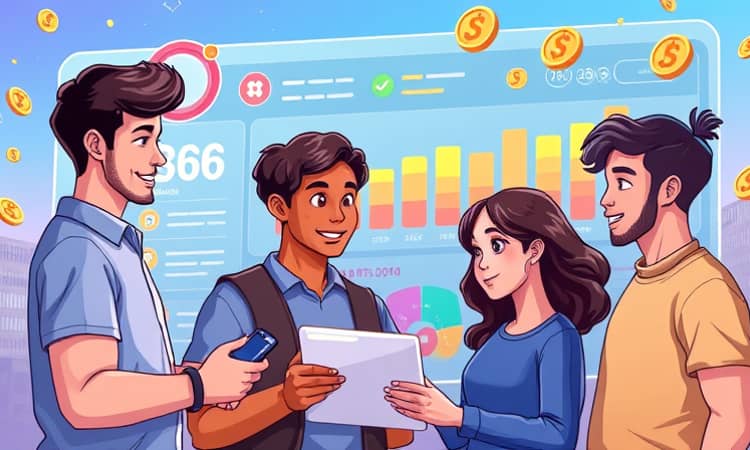
In an era where screen time is at an all-time high and attention spans are fleeting, traditional methods of teaching personal finance often fall flat. Walls of text, static lectures, and dry case studies struggle to spark curiosity or drive behavior change. Yet, with the rise of gamified experiences across industries, a powerful opportunity emerges: combining game design mechanics with money management can transform financial education from a chore into an exciting, lasting journey.
This article explores why gamified financial literacy matters now, examines concrete evidence of its effectiveness, details the core mechanics that engage users, showcases business and institutional success stories, and unpacks the psychological drivers behind sustained behavior change.
Why Traditional Financial Education Falls Short
Despite the wealth of personal finance content available online, engagement remains low. Many users report that educational articles and tutorials feel boring, text-heavy, and passive—leading to minimal real-world impact. Completion rates for standard finance courses hover around 30–40%, and fewer than half of those who enroll actually apply lessons to their daily money decisions.
Meanwhile, digitally native generations—Gen Z and younger millennials—expect interactive, personalized, and entertaining experiences from every platform they use. They’re accustomed to earning rewards in apps, leveling up in games, and sharing achievements on social media. Financial education must adapt to these expectations or risk remaining irrelevant.
The Rise of Gamification: A Structural Shift
Gamification—the integration of game elements into non-game contexts—is booming across sectors. The overall gamification market is valued at approximately $26 billion today and is projected to surge past $130 billion by 2032. Within education, the gamification segment alone is expected to reach $27.5 billion by 2025, growing at nearly 14% annually.
Fintechs and financial institutions are increasingly adopting these mechanics. The “fintech gamification” market is forecast to climb from $15.4 billion in 2024 to nearly $48 billion by 2029. Around 70% of Global 2000 companies now employ gamified systems in some form, while 90% of employees say they find these systems more engaging and productive.
By positioning financial education within this broader momentum, we recognize a larger shift in how people learn, work, and manage money in a digital world.
Evidence That Gamification Improves Behavior
Numbers don’t lie: gamified financial tools consistently outperform traditional approaches when it comes to saving, goal completion, and ongoing engagement.
Additional studies reveal:
- Gamification boosts saving habits by 22%, with users saving 20% more on average than their non-gamified peers.
- Financial wellness programs with game-like features achieve 45% higher participation and a 25% rise in literacy scores.
- Interactive challenges—like weekly saving goals or no-spend weekends—double engagement and foster consistent habits.
These results confirm that gamified design not only attracts attention but also drives tangible improvements in money behavior.
Key Game Mechanics Driving Engagement
What exactly makes an app or program feel like a game? Below are the core mechanics that bridge fun and finance:
- Points & Scoring: Users earn points for completing modules, hitting weekly targets, or making on-time payments. Points unlock new levels and rewards, reinforcing positive habits.
- Badges & Achievements: Milestone badges—such as “First $1,000 Saved” or “30-Day Budget Streak”—provide symbolic rewards and boost motivation through visible progress markers.
- Challenges & Quests: Time-bound tasks like “Save $100 This Week” or “Complete Three Lessons by Friday” break big goals into bite-sized missions, adding urgency and focus.
- Progress Bars & Dashboards: Visual trackers show how close users are to savings or debt-reduction milestones. One study found these progress indicators correlate strongly with more goals set and achieved.
- Leaderboards & Social Comparison: Ranking tables spark healthy competition. Users report higher motivation when they see peers’ progress, tapping into social proof dynamics.
- Simulations & Safe Sandboxes: Risk-free environments let users experiment with investment strategies or emergency expense scenarios, building confidence before making real decisions.
Business and Institutional Impact
Banks, fintechs, employers, and educators are embracing gamified financial literacy to achieve significant ROI.
For example, a regional bank in Texas saw account acquisitions jump 700% and conversion rates climb from 2% to 14% after gamifying its onboarding and educational journeys. Employee wellness programs that integrate interactive money-management games report 45% higher participation and measurable gains in emergency savings and retirement contributions.
Beyond acquisition and engagement, gamification boosts lifetime value. Financial institutions track metrics like daily active users, session length, and feature adoption alongside direct behavior metrics—savings rates, debt reduction, and budget adherence. Those using game mechanics report up to 22% greater customer retention and cross-sell performance increases of 3.5×.
Psychological Underpinnings: Why Games Work for Money Learning
Underlying these successes are well-documented psychological drivers that games leverage to foster lasting change:
- Immediate Feedback: Instant rewards and progress updates satisfy our brain’s craving for quick validation, reinforcing desired actions.
- Sense of Mastery: Levels and tiers create a clear pathway for skill development, increasing confidence and long-term engagement.
- Social Influence: Leaderboards and peer comparisons tap into our innate desire for recognition and community support.
- Goal Gradient Effect: Progress bars and streaks intensify motivation as users get closer to their targets, driving persistence.
- Behavioural Momentum: Small, frequent tasks build positive habits that compound over time, reducing friction for future actions.
Conclusion: Embrace the Future of Money Learning
Financial literacy is too critical to be confined to dull PDFs and one-off workshops. By weaving game mechanics into personal finance education, we can create engaging, habit-forming experiences that deliver measurable results.
Whether you’re designing a new fintech app, revamping a corporate wellness program, or simply seeking better ways to teach money skills, gamification offers a proven path forward. It’s time to level up our approach to financial education and empower individuals to build healthier financial futures—one badge, one point, and one milestone at a time.