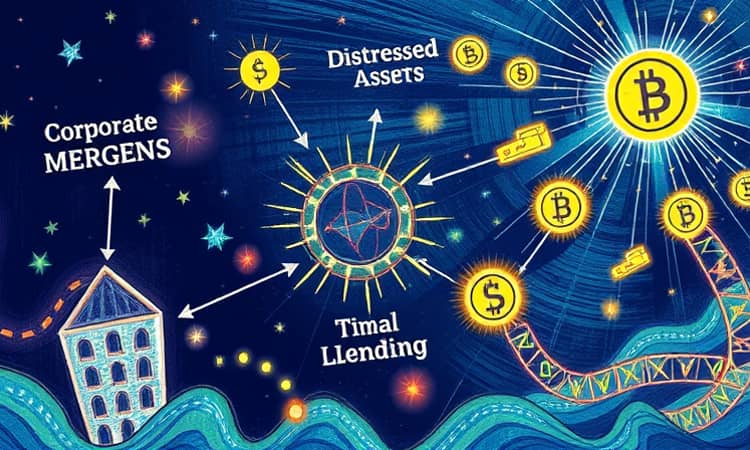
In the rapidly evolving world of finance, loans when you truly need them have become more than a slogan—they are a strategic reality. Event-driven lending aligns funding with the precise moments when borrowers face critical catalysts.
By combining flexible private credit structures with the agility of decentralized finance, this approach redefines traditional capital access.
Defining Event-Driven Lending
At its core, event-driven lending adapts principles of event-driven investing to credit markets. Rather than relying on routine credit checks and fixed-schedule disbursements, lenders and borrowers anchor agreements around specific corporate or market events.
This model thrives on capitalizing on unique event catalysts, such as mergers, spin-offs, restructurings, token unlocks and governance votes. It offers a contrast to conventional loans that often fail to meet time-sensitive needs.
Types of Triggering Events
Event-driven loans can be structured around a wide array of catalysts, unlocking capital exactly when opportunities or challenges emerge.
- Corporate Events: Mergers & acquisitions, spin-offs, tender offers, shareholder activism and management changes generate funding needs or inefficiencies.
- Distressed Situations: Bankruptcies, covenant breaches and defaults in sectors like real estate and industrials trigger discount credit opportunities.
- Crypto & DeFi Milestones: Token unlocks, new token launches, governance incentives (e.g., ArbitrumDAO rewards) and yield-strategy demand spur borrowing.
- Other Catalysts: New product launches, geopolitical developments, regulatory announcements and seasoned equity offerings create event-driven demand.
Mechanics of Event-Driven Lending
Borrowers can secure liquidity without full reliance on crypto collateral, using structures that link to traditional assets.
- Tokenized Treasuries & Commercial Paper: Borrowers pledge tokenized government bonds or short-term debt for dollar-linked credit.
- Private Credit Facilities: Event-driven funds deploy capital at discounted rates ahead of restructurings or spin-offs.
- DeFi Lending Vaults: Protocols like Avalanche’s zkVerified Vaults offer incentives (e.g., $570,000 rewards) to drive on-demand liquidity.
In DeFi contexts, rates can spike around yield strategies such as USDe borrowing against Pendle positions, illustrating timely, flexible funding tied to events.
Benefits for Borrowers and Lenders
Event-driven lending delivers distinctive advantages across the capital spectrum, driving both access and performance.
By diversification in volatile market conditions, portfolios gain ballast during rising-rate environments and geopolitical uncertainty.
Allocating 10–40% of a traditional 60/40 equity/bond mix to event-driven credit shifts an efficient frontier, enhancing returns for a given level of risk.
Risks and Challenges
Despite its promise, event-driven lending carries unique risks that require expert navigation.
- Event Prediction Failure: Inaccurate forecasts can leave capital locked up with no payoff.
- Liquidity Constraints: Lock-up periods and limited redemption windows create opportunity costs.
- Leverage Exposure: Amplifies losses if targeted events do not materialize as expected.
- Manager Dependency: Success hinges on deep credit research and restructure expertise.
Comparing with Traditional and Marketplace Lending
Unlike conventional bank loans, which follow a rigid approval and repayment schedule, event-driven lending offers asymmetric returns from distressed opportunities and timing advantages.
Traditional banking emphasizes strong collateral and steady cash flows, often missing short-lived catalysts. Marketplace lenders provide speed but lack integration with major corporate or crypto events.
Event-driven structures marry the agility of private marketplaces with tailored terms anchored on unique triggers, delivering a middle path between availability and sophistication.
Emerging Trends and Real-World Examples
The 2025–2026 horizon highlights accelerating innovation in both TradFi and DeFi realms.
DeFi protocols increasingly route incentives—ArbitrumDAO’s 40 million ARB DRIP and Avalanche’s $570,000 vault rewards illustrate how governance and yield strategies drive event-driven borrowing demand.
In private credit, rising interest rates bolster the volume of restructurings, distressed debt pipelines and M&A financings, creating fertile ground for specialized event-driven funds.
Illustrative cases include:
- Purchasing bonds of a distressed issuer ahead of bankruptcy, capturing recovery value upon restructuring.
- Financing token unlock schedules to smooth founder liquidity while maintaining protocol stability.
- Funding share purchases during spin-offs to gain exposure to newly independent entities unlocking hidden value.
Takeaways for Investors and Borrowers
Event-driven lending offers a compelling toolkit for those seeking unlocking hidden value in spin-offs or distressed credits, marrying timing with targeted funding.
Borrowers benefit from rapid, tailored access at critical junctures, while lenders can pursue risk-adjusted returns beyond market beta and diversify away from broad market swings.
Successful participation requires rigorous due diligence, strong legal frameworks and expert event forecasting. By understanding mechanics, benefits and perils, market participants can harness this innovative approach to achieve financial goals in dynamic environments.