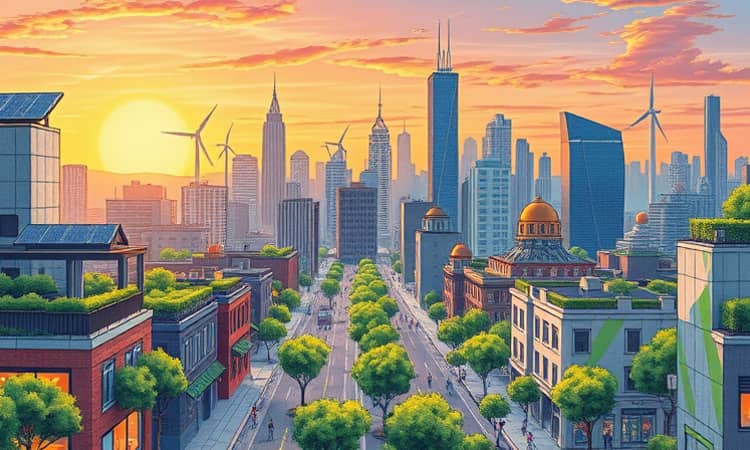
Today’s urban landscape stands at a crossroads where billions of people live and work. The intersection of ecological sustainability and financial capital—what we call Eco-Capital—offers a transformative pathway to address global challenges such as climate change, water scarcity, social inequity, and aging infrastructure. By investing strategically in resilient, energy-positive communities, we can align economic growth with planetary limits and create opportunities for all.
Setting the Stage: The Eco-Capital Imperative
As more than 50% of the world’s population now resides in cities—a figure projected to rise to two-thirds by 2050—our urban centers face mounting pressure. public and private finance must converge to fund retrofits, infrastructure upgrades, and innovative technologies that drive decarbonization while promoting social inclusion.
The United Nations’ SDG 11 framework calls for inclusive resilient sustainable cities that are safe, resource-efficient, and equitable. Achieving this vision demands purposeful alignment of policy, finance, and grassroots engagement, guided by clear targets and robust monitoring systems.
Sustainable Urban Transformation
Retrofitting existing stock is critical, as buildings account for 39% of global energy-related CO2 emissions. Through retrofitting existing buildings at scale, cities can dramatically reduce heating, cooling, and operational carbon footprints without sacrificing heritage or livability.
Moving beyond consumption, buildings can become net producers of energy. Deploying rooftop solar, battery storage, and hydrogen systems—coupled with electric vehicle integration—unlocks energy positive urban environments that support local microgrids and enhance resilience against supply disruptions.
Leveraging digital tools such as real-time sensors, AI-driven analytics, and digital twins empowers managers to optimize performance. integrated digital monitoring tools can detect inefficiencies, predict maintenance needs, and guide incremental improvements, driving continuous decarbonization.
Global Challenges and Strategic Responses
Major threats such as extreme heatwaves, flooding, and water shortages demand coordinated responses across sectors. Urban residents face compounding risks from aging systems and climate volatility.
- Heatwaves, floods, and storm surges intensify risks.
- Water scarcity grips half of the largest cities globally.
- Aging power grids struggle with renewable intermittency.
- Social inequities hinder inclusive growth.
By adopting a multi level governance approach—linking local authorities, national agencies, and private actors—cities can implement integrated strategies that safeguard communities and ecosystems.
The Pivotal Year of 2026
2026 marks a turning point for urban sustainability. A series of high-profile events will set science to policy implementation pathways and mobilize stakeholders worldwide. These gatherings will review progress on the New Urban Agenda, integrate biodiversity and climate action under the Rio Conventions, and launch new multilevel urban programs under the IPCC’s Special Report on Cities.
Collectively, these milestones will reshape policy agendas and unlock financing mechanisms, setting the stage for accelerated urban transformation.
Investment and Capital Opportunities
Eco-Capital channels investments into projects that generate measurable social, environmental, and financial returns. Shifting capital toward sustainable infrastructure and green technologies is essential to decouple growth from carbon emissions.
- Green building retrofits and deep decarbonization.
- Renewable energy generation and microgrid development.
- Water recycling, desalination, and conservation systems.
- Capacity-building programs in the Global South.
- Innovation challenges and accelerator grants.
Through targeted policy incentives and rewards, governments can de-risk these ventures, spurring private sector participation and fostering new market opportunities.
Case Studies and Collaborative Models
The Hangweide project in Kernen, Germany, showcases community centered urban design by combining 34 subsidized flats with green roofs, solar arrays, and shared gardens in a heritage-sensitive retrofit. This model reduces emissions while enhancing social cohesion.
Toyota’s Sustainable Cities Challenge selected ten cities worldwide to pilot integrated mobility solutions—ranging from curbside management to shared electric fleets—under public-private partnerships that address congestion, pollution, and equity.
Platforms like CitiesWithNature and the Global Covenant of Mayors demonstrate how data-driven networks empower municipalities to set targets, track progress, and exchange best practices, all aligned with the IPCC’s urban climate science.
Overcoming Barriers and Leveraging Innovations
Regulatory complexity, siloed budgets, and technical hurdles can hamper progress. To overcome these obstacles, stakeholders must embrace flexible frameworks that encourage experimentation and iteration.
Policy reforms that reward incremental decarbonization and innovation—rather than penalize threshold breaches—can accelerate market uptake. Cross-disciplinary collaboration among engineers, planners, financiers, and communities is vital to translate ambition into on-the-ground impact.
Emerging technologies such as power-to-gas hydrogen systems and city-scale digital twins offer compelling avenues to optimize lifecycle performance, enhance grid stability, and prepare for extreme climate events.
Charting a Resilient Future
With the momentum of 2026 acting as a catalyst, cities have an unprecedented opportunity to pioneer holistic sustainability pathways. Aligning Eco-Capital flows with the SDG 11 framework ensures that investments advance safety, equity, and environmental stewardship.
Embracing climate biodiversity land synergies across finance, policy, and grassroots initiatives can unlock powerful co-benefits for people and nature. When communities, investors, and governments unite around shared goals, the vision of energy-positive, inclusive, and resilient cities moves from aspiration to reality.
The journey ahead demands perseverance, creativity, and collective resolve. By harnessing the power of Eco-Capital, we can forge urban environments that not only withstand the challenges of the 21st century but also flourish as vibrant, equitable, and sustainable spaces for all.