Derivatives are often perceived as complex instruments reserved for institutional traders and high-finance professionals. Yet, understanding and applying these tools can empower individuals and businesses alike to navigate uncertainty, protect assets, and seize emerging opportunities. This article breaks down the global derivatives market, reveals its key drivers, and offers practical guidance for leveraging these instruments effectively.
Understanding the Derivatives Landscape
The global derivatives market exhibits remarkable scale and diversity. In 2023, its value stood at USD 28,152.51 million, climbing to an estimated USD 30,573.62 million in 2024. By 2026, forecasts range between USD 33,207.56 million and USD 36,058.43 million, reflecting sustained risk management need across industries.
Derivatives fall into three principal categories: futures, options, and swaps. Futures are standardized contracts to buy or sell an asset at a preset price on a future date. Options grant the right—but not the obligation—to execute a transaction, offering flexible downside protection. Swaps exchange cash flows, such as interest rate or currency exposures, and are predominantly traded over-the-counter.
Major Market Dynamics Driving Growth
Several forces underpin the robust growth of derivatives markets worldwide. From rapid technological advances to shifting geopolitical landscapes, these dynamics shape opportunity.
- Rising global volatility and complexity: Fluctuations in interest rates, commodities, and currencies call for sophisticated hedging strategies.
- Technology and digitization: AI, machine learning, and algorithmic trading enable real-time analytics and automated execution.
- Emerging markets expansion: Asia-Pacific leads with over 30% ETD growth in 2023, while China and India drive unprecedented volumes.
- Post-pandemic resilience: Supply-chain disruptions, inflationary shifts, and policy changes heighten demand for protective instruments.
- Political and regulatory evolution: Geopolitical tensions and transparency initiatives reshape market structure and participant behavior.
These drivers illustrate how derivatives address both speculative ambitions and fundamental hedging requirements for stability in uncertain environments.
Key Players and Regional Outlook
Global financial institutions dominate the derivatives ecosystem. Major banks such as Goldman Sachs, J.P. Morgan, and Deutsche Bank facilitate trillions in notional trades, while regional futures houses in Asia—like Yongan Futures and CITIC Securities—fuel growth in local markets.
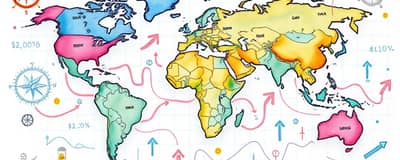
Regional diversity is striking. North America holds a 39.35% share of the 2025 market, while Asia-Pacific follows at 25.35%, thanks to fast-growing exchanges in China, Japan, and India. Europe commands just over 20%, with emerging hubs in the Middle East and South America gaining traction.
This breakdown underscores the geographically diverse growth trajectory that defines modern derivatives markets.
Implementing Derivatives in Your Financial Strategy
Whether you manage a corporate treasury, a hedge fund, or personal investments, derivatives can enhance risk management and return potential. Follow these steps to integrate them responsibly:
- Assess your exposure: Identify volatility risks in your portfolio or operations—currency, rates, or commodity shifts.
- Choose suitable instruments: Match futures for price locking, options for asymmetric protection, or swaps for cash-flow matching.
- Set clear objectives: Define whether you aim to hedge costs, improve returns through speculations, or optimize capital efficiency.
- Monitor positions actively: Leverage electronic platforms and real-time analytics to track market moves.
- Mitigate counterparty risk: Diversify counterparties, use cleared exchanges, and adhere to evolving regulations.
By adopting these practices, you harness the strategic potential of financial derivatives while maintaining disciplined oversight.
Looking Ahead: The Future of Derivatives
Experts forecast compound annual growth rates exceeding 8.5% through 2035, propelled by continued globalization, technological innovation, and rising demand in emerging economies. The integration of AI-driven risk models, blockchain-based clearing, and sustainability-linked contracts promise to reshape market infrastructure and access.
As the world grapples with inflationary pressures, climate risks, and geopolitical volatility, derivatives will remain vital tools for preserving value and capturing opportunity. Whether you are a seasoned trader or a new participant, embracing these instruments responsibly can yield significant benefits.
Armed with this knowledge, you can approach the derivatives market with confidence—deploying futures, options, and swaps as part of a comprehensive strategy that balances risk and return. The journey begins with understanding, evolves through practice, and thrives on innovation as global markets continue to transform.