In the intricate tapestry of global finance, understanding the recurring patterns of expansion and contraction is essential for anyone seeking to thrive in uncertain times.
This knowledge transforms chaos into opportunity, offering a roadmap through economic ups and downs.
By decoding these cycles, you can build tangible financial resilience and make informed decisions that stand the test of time.
The Heartbeat and Pulse: Economic vs. Market Cycles
Economic cycles serve as the heartbeat of the real economy, measured by indicators like real GDP and employment.
Market cycles, in contrast, represent the pulse of investor expectations, often visible in asset prices such as stocks.
While intertwined, these cycles can sync or diverge, creating layers of complexity that savvy observers can navigate.
Grasping this duality allows you to anticipate shifts and align strategies with broader trends.
Dissecting the Economic Cycle: A Four-Phase Journey
The economic cycle unfolds through four distinct phases, each with unique characteristics that shape business and investment landscapes.
Expansion marks a period of growth, where rising real GDP and employment signal prosperity.
Inflation typically remains low early on, fostering a conducive environment for expansion.
The peak is the zenith of activity, where growth slows and inflationary pressures may escalate, testing economic stability.
Contraction or recession follows, characterized by declining output and often defined by two consecutive quarters of negative GDP growth.
This phase brings rising unemployment and reduced confidence, challenging resilience.
The trough is the cycle's lowest point, setting the stage for recovery and renewed expansion.
Understanding these phases helps in timing investments and planning for future challenges.
- Expansion: Rising real GDP, employment, and incomes; low inflation early on.
- Peak: Highest economic activity; slowing growth and potential inflation spikes.
- Contraction/Recession: Declining output and rising unemployment; often triggered by policy shifts.
- Trough: Bottom of the cycle; precursor to recovery and new growth phases.
Each phase demands tailored responses to maximize opportunities and mitigate risks.
Market Cycles: The Investor's Emotional Rollercoaster
Market cycles mirror investor psychology, evolving through accumulation, markup, distribution, and markdown phases.
Accumulation occurs after a market bottom, where value investors buy amid pessimism and skepticism, seizing undervalued assets.
Markup sees prices rise steadily, with sentiment turning bullish and sometimes euphoric, attracting retail participants.
Distribution phases involve sideways movement, where early sellers offload to latecomers amid mixed and cautious sentiment.
Markdown brings price declines, dominated by fear and panic selling, often anticipating economic downturns.
Identifying these phases in real time is challenging but crucial for strategic positioning.
- Accumulation: Post-bottom buying; value investors enter; sentiment negative to neutral.
- Markup: Uptrend with rising prices; bullish sentiment; retail investors join.
- Distribution: Stalled momentum; mixed sentiment; institutional selling.
- Markdown: Price declines; fear dominates; sets up next accumulation.
By recognizing these patterns, you can avoid emotional traps and capitalize on cyclical opportunities.
Key Drivers Shaping Global Rhythms
Multiple factors drive economic and market cycles, from policy changes to external shocks, creating the rhythms that define global dynamics.
Monetary policy, through interest rate adjustments and liquidity measures, directly influences credit and investment flows.
Fiscal policy, involving government spending and taxation, can stimulate or dampen economic activity during critical phases.
Global conditions, such as trade flows and commodity prices, transmit cycles across borders, amplifying interconnectedness.
Technological change acts as a catalyst, with innovations triggering new growth phases and reshaping industry landscapes.
Geopolitical events, like wars or pandemics, can abruptly end cycles, introducing volatility and uncertainty.
- Monetary policy: Central bank actions on rates and liquidity.
- Fiscal policy: Government spending and tax impacts.
- Global economic conditions: Trade and capital flow effects.
- Technological shifts: Productivity boosts from innovations.
- Geopolitical shocks: Sudden disruptions from external events.
Monitoring these drivers enables proactive adaptation to evolving economic environments.
Global Desynchronization: Navigating Different Phases
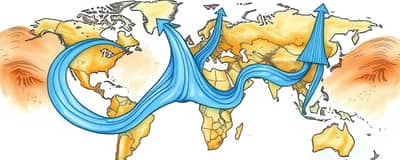
The global economy often features unsynchronized expansion, where countries experience different cycle phases simultaneously, adding complexity to decision-making.
For instance, the U.S. might show improving corporate profits amid softening labor markets, indicating a mixed late-cycle dynamic.
Emerging markets could be in early recovery, with accelerating growth and low inflation, presenting unique investment opportunities.
Europe may face challenges from policy changes or external demand shifts, requiring careful analysis.
This desynchronization demands a nuanced approach to international investments and risk management.
- U.S.: Late cycle with corporate profit gains but labor market softness.
- Emerging markets: Early recovery with growth acceleration and accommodative policies.
- Europe: Mixed signals from fiscal adjustments and trade dependencies.
By understanding regional variations, you can diversify effectively and tap into global growth pockets.
Strategies for Thriving in Any Cycle
To navigate cycles successfully, adopt practical strategies that enhance resilience and optimize outcomes across different phases.
Diversify your portfolio across asset classes and geographies to mitigate risks from cyclical volatility and unsynchronized expansions.
Stay informed on key indicators like GDP growth and unemployment rates, using them as guides for timing decisions.
Adjust your investment approach based on the cycle phase, such as favoring defensive assets in late cycles or cyclical ones in recoveries.
Maintain a long-term perspective to avoid emotional reactions during market swings, focusing on fundamental value.
Use dollar-cost averaging to smooth out volatility, building positions gradually over time.
- Diversify across assets and regions for risk reduction.
- Monitor economic indicators for phase insights.
- Tailor investments to cycle phases for optimal returns.
- Embrace a long-term view to withstand short-term fluctuations.
- Employ dollar-cost averaging to manage entry points.
These practices empower you to turn cycle knowledge into actionable steps for financial growth.
This table highlights the interplay between economic and market cycles, aiding in phase identification.
By mastering these concepts, you can decode the rhythms of global economies, turning uncertainty into a source of strength and inspiration.
Embrace the cycles as natural ebbs and flows, and let them guide you toward smarter, more confident financial choices.