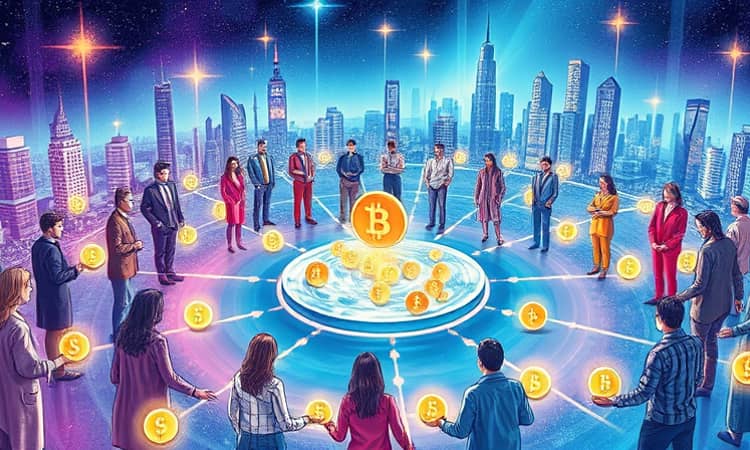
The traditional insurance industry has long been defined by centralized corporations, extensive paperwork, and high administrative fees. Today, a new paradigm is emerging that challenges this model by empowering communities to manage risk together. Decentralized insurance leverages blockchain technology to create transparent, efficient, and inclusive protection networks, putting power back into the hands of individuals.
By harnessing the power of smart contracts and token-based governance, participants can form affinity pools that share premiums, automate claims, and return unused funds. This shift not only reduces costs but also fosters trust and solidarity among members.
Understanding Decentralized Insurance
At its core, decentralized insurance is built on peer-to-peer risk sharing without intermediaries. Instead of paying premiums to a distant company, users contribute tokens into a common fund. Coverage becomes a digital asset: policies are represented by blockchain tokens, and claims are executed by code rather than people.
This model relies on a few key mechanisms:
- Risk Pooling: Premiums from members accumulate in a shared fund, where unused balances may be refunded or donated.
- Tokenization: Policies are minted as tokens, granting holders explicit rights and transparency.
- Automated Claims: Smart contracts trigger payouts based on predefined events, ensuring automated claims via smart contracts and reducing fraud.
- Governance: Participants use governance tokens to vote on underwriting rules, claim approvals, and risk parameters.
- Affinity Groups: Communities form around shared interests, locations, or risk profiles to foster fairness.
Historical Roots of Mutual Aid
Long before modern insurers, communities pooled resources to weather disasters. In ancient China, groups contributed rice or grain to replace lost harvests. Medieval guilds in Europe formed mutual aid societies for funeral costs and illness benefits. These early examples of community-driven risk sharing models laid the groundwork for today’s decentralized protocols.
The 20th century introduced formal corporations to manage these risks, but overhead and opacity often overshadowed mutual benefit. Now, blockchain is reconnecting us to those cooperative origins, while scaling them globally.
How It Works in Practice
Decentralized insurance platforms operate on public ledgers like Ethereum, Solana, and Avalanche. Users choose a protocol, specify coverage parameters—asset type, value, and duration—and pay premiums in cryptocurrency. Once the pool reaches a threshold, the policy is activated.
When a covered event occurs, such as a smart contract exploit or flight delay, or even a natural disaster, on-chain oracles feed verified data into the smart contract. If conditions match predefined criteria, the contract executes an immediate payout to the claimant, delivering rapid and transparent payouts.
Comparing Traditional and Decentralized Models
The table below highlights fundamental distinctions between centralized insurers and decentralized, P2P alternatives.
Key Benefits
Decentralized insurance unlocks a range of advantages that can transform how we protect our assets and communities.
- Lower premiums via no intermediaries, cutting overhead and passing savings to participants.
- Global access to financial services for anyone with an internet connection.
- Community-driven governance through DAOs, aligning incentives and ensuring accountability.
- Transparent transaction records on public ledgers build trust and reduce disputes.
- Customized affinity pools that match unique risk profiles or shared values.
Challenges and Considerations
Despite its promise, decentralized insurance faces several hurdles:
Regulatory frameworks around insurance are often jurisdiction-specific and may struggle to adapt to blockchain-based models. Data privacy is another concern: public ledgers can expose transactional details that some users prefer to keep confidential.
Scalability remains an issue as networks handle growing numbers of transactions. Smaller pools may experience risk concentration if a catastrophic event triggers multiple large claims. Finally, adoption barriers such as crypto volatility and technical complexity can deter mainstream users.
Real-World Examples and Case Studies
Several pioneering platforms demonstrate the potential of decentralized insurance.
Nexus Mutual uses a DAO structure and its NXM token to underwrite smart contract failures, with members voting on claims. OpenCover has provided near-instant payouts following hacks like the Arcadia breach, highlighting rapid and transparent payouts. On the hybrid side, Lemonade in the U.S. pays 90% of claims in under three minutes and channels unclaimed premiums to charity pools, blending P2P principles with traditional infrastructure.
Friendsurance and Teambrella showcase how affinity groups—whether families, drivers, or freelancers—can pool small risks and then secure reinsurance for larger losses.
Empowering Communities and Closing the Protection Gap
An estimated billions remain underinsured or uninsured worldwide. Decentralized insurance can formalize informal sharing networks, bringing protection to remote or marginalized populations. By minimizing costs and leveraging local knowledge of risks, these models can bridge coverage gaps and offer a safety net where conventional insurers cannot operate cost-effectively.
This communal empowerment extends beyond finance; it fosters solidarity and collective responsibility, reminding us that risk is best managed together.
The Road Ahead
The future points toward hybrid models that combine community pools for routine risks with reinsurance backstops for catastrophic events. Cross-chain solutions will enhance scalability, while AI-driven oracle validation can streamline claims accuracy. As regulators and institutions adapt, decentralized insurance may integrate with mainstream markets, delivering on its promise of accessible, efficient protection for all.
Whether you are a developer, investor, or curious participant, now is the time to explore decentralized insurance protocols. Join a DAO, participate in a risk pool, or simply research token-based coverage options. By embracing this innovation, you help shape a more transparent, equitable, and resilient future for global risk sharing.