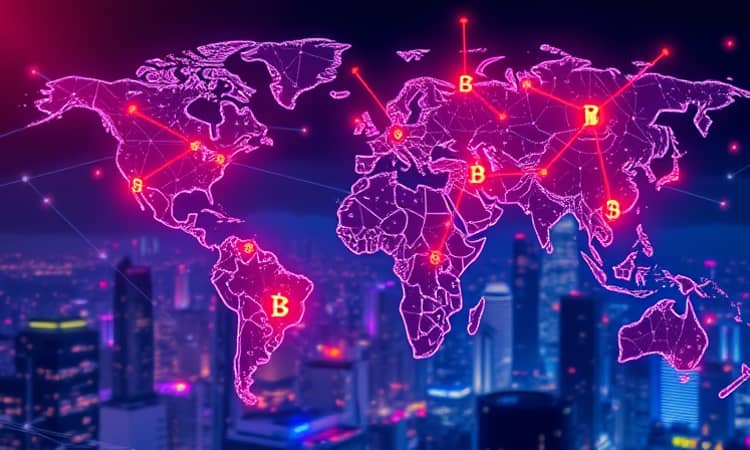
In recent years, a revolutionary movement has emerged at the intersection of technology and finance. Decentralized finance, or DeFi, seeks to reimagine the entire financial landscape by removing intermediaries and empowering individuals worldwide. This article explores how DeFi is redefining money, markets, and trust, and provides practical insights for anyone eager to participate in this dynamic ecosystem.
Understanding DeFi: Definition and Evolution
Decentralized finance, commonly known as DeFi, provides a suite of financial services—lending, borrowing, trading, insurance, and more—directly on permissionless blockchains. By leveraging open-source smart contracts, DeFi enables permissionless and decentralized financial services without traditional banks or centralized exchanges.
The concept gained traction in 2018 when Ethereum developers coined the term. Since then, the space has rapidly evolved, adopting programmable architectures and composable protocols that allow developers to build on each other’s work. This synergy has driven unprecedented innovation, setting the stage for a truly global financial system.
Core Components and Applications
DeFi operates through several fundamental building blocks that together deliver a complete financial stack on-chain:
- Smart contracts: self-executing code that automates agreements
- Lending and borrowing platforms, enabling instant credit
- Decentralized exchanges (DEXs) for trustless trading
- Stablecoins and tokenized real-world assets, bridging markets
- Yield farming and staking for passive income generation
These services run primarily on blockchains like Ethereum and Solana, while Layer-2 solutions such as Arbitrum and Optimism provide near-instant settlement and low fees. Together, they form a peer-to-peer network without intermediaries, granting anyone with a wallet immediate access to complex financial operations.
Market Growth, Statistics, and Regional Trends
The DeFi ecosystem has witnessed explosive growth, driven by broader adoption of digital assets and ongoing technological advancements. Below is a summary of key market projections:
North America currently leads in market share, driven by a strong venture capital ecosystem and developer community. The Asia-Pacific region, however, is the fastest growing, propelled by retail adoption and cross-border payment solutions. Europe, Latin America, and Africa continue to emerge as fertile grounds for financial inclusion.
Key Benefits Powering DeFi Adoption
Decentralized finance offers a range of advantages that challenge the traditional financial system:
- Universal accessibility without banking infrastructure
- Public transparency through verifiable transaction records
- User control via self-custodied private keys
- Composability enabling rapid innovation across protocols
- Global reach and near-instant settlement times
With self-hosted custody options for end users, individuals gain sovereignty over their assets and can engage in lending, trading, and investing anywhere in the world without intermediaries.
Risks, Challenges, and Resilience
While DeFi’s potential is immense, the landscape is not without risks. High on the list are security vulnerabilities, including smart contract exploits and protocol hacks. Regulatory ambiguity also poses a challenge, as global frameworks struggle to keep pace with innovation.
- Smart contract vulnerabilities and protocol hacks
- Regulatory ambiguity and evolving oversight
- Network congestion and gas fee spikes
- Liquidity risks and market volatility
Other factors such as dependency on major cryptocurrencies like Ether and potential liquidity crises can affect stability. However, the community-driven nature of DeFi has fostered swift responses to incidents, with bug bounties, audits, and protocol insurance emerging as vital tools for risk mitigation.
Leading Protocols and Emerging Innovators
A handful of platforms have become synonymous with DeFi’s success. Market leaders—Uniswap Labs, Aave, MakerDAO, and Compound Labs—facilitate trillions of dollars in trading volume and billions in loans each year.
Specialized projects like Curve Finance for stablecoin swaps, Synthetix for derivatives trading, and Lido Finance for liquid staking push the boundaries of what is possible. Emerging innovators such as Ondo Finance for real-world asset tokenization and Centrifuge for supply chain financing illustrate the ecosystem’s breadth.
The Road Ahead: Future Outlook and Global Impact
Looking forward, the convergence of DeFi and traditional finance will reshape global financial infrastructure. As regulatory clarity emerges, institutional adoption of tokenized assets and decentralized lending pools is expected to accelerate.
Layer-2 scaling solutions will unlock higher throughput and lower costs, while breakthroughs in decentralized identity and governance will enhance security and user experience. The integration of real-world assets—from real estate to commodities—will further anchor DeFi in mainstream markets, unlocking trillions in capital.
Ultimately, Decentralized Finance stands at a crossroads of innovation and maturity. With transparent, programmable, and permissionless financial infrastructure, DeFi pioneers a future where financial services are inclusive, efficient, and resilient. For individuals, this means access to credit, yield opportunities, and borderless payments like never before. For institutions, a new frontier of asset management, fundraising, and cross-border transactions awaits.
As we enter this transformative era, collaboration among technologists, financiers, and policymakers will be crucial to ensure DeFi’s promise is realized responsibly. With balanced innovation, robust security, and thoughtful regulation, Decentralized Finance will indeed shape the next global system.