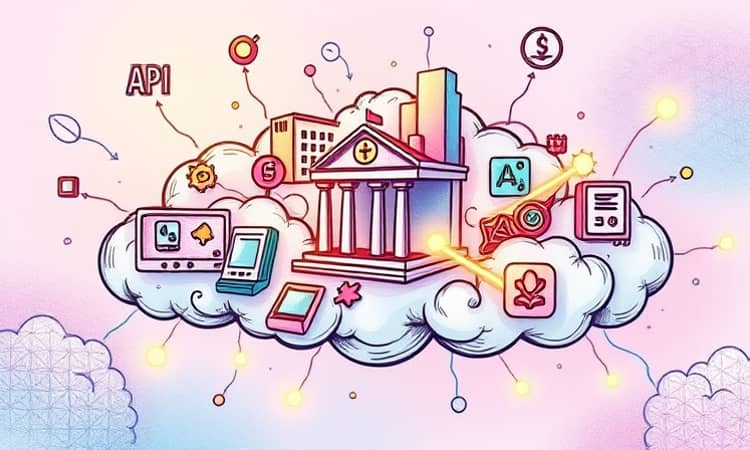
In a world where financial services must adapt at lightning speed, composable banking emerges as a beacon of transformation. By dissecting monolithic systems into modular building blocks, institutions can craft tailored experiences that meet ever-evolving customer needs. This article explores how banks can harness composability to drive innovation, efficiency, and lasting competitive advantage.
What Is Composable Banking?
At its core, composable banking represents modular, API-driven architectural components that break down complex systems into independent, reusable building blocks. Each service—account management, payment processing, or risk scoring—can be developed, deployed, and scaled in isolation, fostering unprecedented flexibility.
These microservices are orchestrated dynamically to create bespoke solutions for any use case. Teams can upgrade one module without disrupting others, minimizing risk and maximizing uptime.
Such a design uses loosely coupled services communicating via APIs and event-driven platforms like Kafka or RabbitMQ, unlocking speed and resilience previously unattainable in monolithic cores.
The Evolution from Legacy to Composable
Traditional core banking systems were built for stability, often at the expense of agility. Introducing new features could take months or even years, hindered by tightly integrated databases and exhaustive regression testing.
In contrast, fintech innovators leverage composable architecture to iterate rapidly, forcing incumbents to rethink their models. This shift enables continuous innovation and faster feature launches, allowing banks to respond in days rather than quarters.
By retiring outdated codebases and reducing technical debt, banks free up resources to invest in customer-facing innovation rather than infrastructure upkeep.
Key Components and Technology Enablers
Building a composable banking platform requires a cohesive set of services and infrastructure. Core modules include:
- Account Management: creation, lifecycle handling, and access controls
- Payment Processing: routing, settlement, and reconciliation
- Compliance Services: KYC, AML screening, and audit trails
- Risk & Fraud Detection: real-time scoring and anomaly monitoring
- Digital Wallets & Lending: embedded finance capabilities
- API Gateways & Event Brokers: secure, reliable communication
These modules are governed through middleware, orchestration tools, and monitoring dashboards that ensure real-time data aggregation and insights. Cloud-native platforms and container orchestration streamline deployments, while API catalogs enforce standards and version control.
Primary Benefits of Composable Banking
- Agility & Speed: rapidly launch new products to seize market opportunities
- Cost Efficiency: pay-for-use models reduce upfront investments
- Elastic Scalability: scale individual services during peak demand
- Hyper-Personalization: deliver tailored financial experiences at scale
- Innovation Sandbox: safely experiment with features in isolation
- Vendor Independence: swap components without disruption
Beyond cost savings and speed, institutions can measure ROI through metrics such as reduced time-to-market, lower incident rates, and improved customer satisfaction scores.
Transforming Customer Experiences
Customer expectations have never been higher. Composable banking empowers institutions to craft seamless omnichannel customer journeys—from digital onboarding to mortgage approval—without silos or delays.
Integrating AI-driven recommendation engines and voice-enabled assistants fosters deeper engagement, while financial wellness modules deliver personalized budgeting advice, fostering long-term loyalty.
Implementing Composable Banking: A Roadmap
Adopting composable banking involves strategic planning and organizational alignment. Key steps include:
- Modernize the Core: migrate to a cloud-native digital core built on microservices
- Foster a Platform Mindset: cultivate cross-functional teams focused on modular delivery
- Deploy API-First Tools: implement gateways, catalogs, and security protocols
- Establish Governance: define standards, monitor SLAs, and enforce compliance
- Partner Strategically: integrate fintech solutions for specialized capabilities
Pilot projects play a crucial role in demonstrating value. By selecting a non-critical service—like a loyalty rewards module—banks can validate integration patterns, monitor KPIs such as transaction throughput, and refine governance policies before broader rollout.
Although redesigning processes and migrating data can be challenging, a phased approach and clear communication across stakeholders help ensure a smooth transformation.
Real-World Success Stories
Forward-thinking banks and fintechs worldwide have embraced composable banking to gain a competitive edge. A leading European institution reduced its time-to-market by 60% by decoupling payment and KYC modules. A challenger bank rolled out a digital lending platform within weeks, adjusting credit criteria in real time based on behavioral data.
Across APAC, a regional bank implemented a composable fraud detection service that scaled automatically during peak shopping seasons, cutting false positives by 30% and enhancing customer trust.
The Future of Banking Is Composable
As embedded finance, AI-driven personalization, and open banking reshape financial services, composable architecture becomes the backbone of innovation. Institutions that master modular design will be positioned to integrate emerging technologies—like machine learning fraud detection or blockchain-based settlements—effortlessly.
By prioritizing customer-centric modularity and ongoing adaptability, banks can build resilient, future-ready platforms that deliver value at every touchpoint, outpace competitors, and foster lasting relationships.
Composable banking is more than a trend—it is a strategic imperative for any institution seeking to thrive in an era of rapid change. By embracing modularity, leveraging APIs, and fostering a culture of experimentation, you can construct a bespoke financial toolkit that meets both current demands and tomorrow’s challenges.