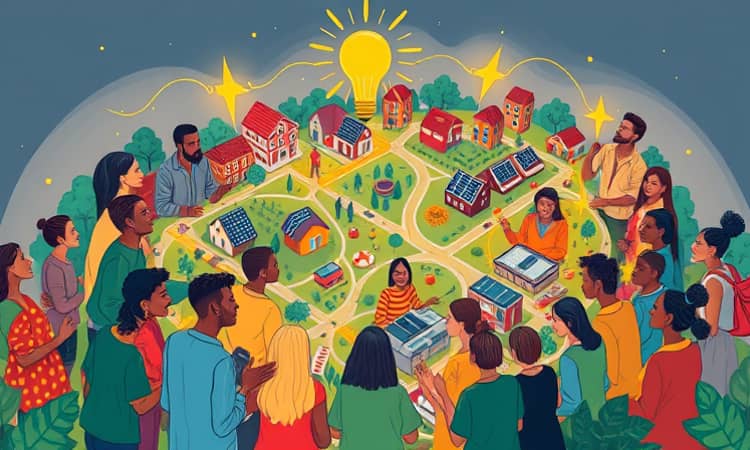
Across the globe, people are uniting to reclaim agency over local development. No longer passive recipients of externally driven projects, neighborhoods now harness digital and cooperative structures to reshape their economies. Community-Led Investment Platforms represent a paradigm shift, where financial resources and decision-making power converge in the hands of those who understand the unique challenges and aspirations of their surroundings. By weaving together self-determination and community governance, these models create resilient pathways toward holistic prosperity.
Definition and Core Concepts
At their core, Community-Led Investment Platforms empower groups to channel capital into projects rooted in local priorities. These initiatives diverge from traditional top-down flows by fostering a reciprocal relationship between investors and beneficiaries. Communities define project goals, oversee allocation, and measure impacts according to values that matter most to them.
The model rests on principles such as democratization of financial decision-making and local knowledge and traditional ecological knowledge. By integrating grassroots wisdom with modern financial tools, these platforms tailor solutions for sustainable outcomes. Governance structures range from co-ops and trusts to digital networks, but all share a commitment to transparent, accountable stewardship.
Historical Evolution
The roots of collective investment trace back to credit unions and cooperative banks, where members pooled savings for mutual benefit. These bottom-up institutions championed economic democracy via local ownership, challenging exclusionary banking practices. Over time, self-help movements gave rise to formal mechanisms like community bonds and participatory budgeting, reflecting a growing awareness of the link between ownership and long-term sustainability.
In recent decades, crowdfunding tools and digital platforms accelerated this evolution. Neighborhood groups launched campaigns for renewable energy, affordable housing, and cultural preservation. Each success story reinforced the idea that communities, when granted both capital access and governance rights, can revolutionize local development.
Key Principles and Pillars
- Equitable access to capital for underserved groups, rectifying historical injustices.
- Social capital and collective efficacy, strengthening bonds through shared investment.
- Principles of a circular economy, reducing waste and promoting local supply chains.
- Holistic sustainability framework balancing impacts, integrating social, environmental, and cultural values.
- Participatory investment and shared prosperity, ensuring voices shape outcomes.
These pillars guide every stage of a project’s lifecycle, from idea generation to impact assessment. They foster trust, nurture relationships, and align financial flows with long-term community well-being.
Innovative Tools and Technologies
Advancements in technology have democratized finance even further. Mobile apps, blockchain networks, and DeFi protocols enable secure, transparent transactions that bypass traditional intermediaries. Community members can invest, vote, and track progress in real time, enhancing engagement and accountability.
- Online crowdfunding portals for collective giving and investment into local ventures.
- Community Investment Trusts (CITs), perpetual structures that pool resident capital for shared assets.
- Participatory budgeting tools, digital and offline frameworks for allocating public funds.
- Decentralized finance (DeFi) platforms, enabling peer-to-peer lending and tokenized assets.
Together, these instruments forge a toolkit that communities customize to their context, whether launching solar cooperatives, supporting artisanal workshops, or preserving historic corridors.
Real-World Applications and Success Stories
Across urban and rural landscapes, these platforms have delivered tangible results:
Each case exemplifies how mobilized residents, guided by community governance and local expertise, can steer investment toward equitable development. These examples inspire other regions to adapt similar frameworks.
Benefits and Impacts
Community-Led Investment Platforms generate a spectrum of returns beyond the financial. They cultivate social cohesion and collective growth, as neighbors rally around shared goals. Environmental benefits arise when projects prioritize renewable energy, biodiversity, and sustainable agriculture. Cultural impacts emerge as communities reclaim narratives and spaces, preserving traditions while innovating for the future.
Moreover, these platforms address systemic inequalities. By channelling resources to historically marginalized groups, they dismantle barriers to wealth creation. Transparent governance and secure digital processes reinforce trust, enabling even remote participants, like diaspora members, to engage meaningfully.
Challenges and Future Directions
Despite remarkable progress, obstacles remain. Many communities lack technical expertise to design robust platforms. Regulatory frameworks can lag behind innovation, creating uncertainty around securities and governance. Ensuring long-term engagement requires ongoing education, capacity-building, and inclusive leadership.
Looking ahead, combining immersive technologies like virtual reality with participatory design could deepen engagement. Collaborative networks across regions can share best practices and pool resources for larger-scale impacts. By reinforcing local agency and capacity-building, future initiatives will expand access and resilience.
Ultimately, Community-Led Investment Platforms embody a vision where capital fuels human dignity, environmental stewardship, and collective empowerment. As more neighborhoods embrace these models, they chart a course toward equitable, sustainable futures—one community at a time.
Conclusion
In a world confronting climate, economic, and social crises, community-driven investment offers a beacon of hope. By realigning financial systems with human values, these platforms prove that empowered citizens can architect transformative change. Now is the moment to support, scale, and innovate together, unlocking the full potential of collective growth.