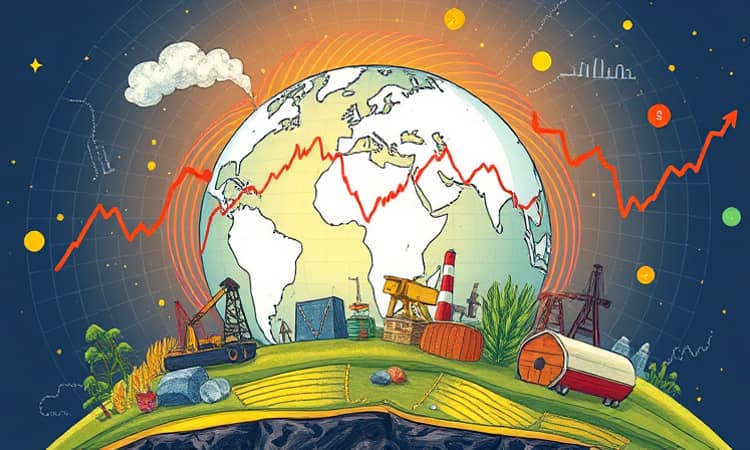
In the vast arena of global economics, few forces are as transformative and enduring as commodity supercycles.
These are not just short-lived spikes or dips but multi-decade booms and busts that redefine entire industries and economies.
By grasping their rhythms, you can turn volatility into advantage and navigate the turbulent waters of international markets with confidence.
This article delves deep into what supercycles are, their history, mechanisms, and practical strategies for riding these global price swings.
What Are Commodity Supercycles?
A commodity supercycle is an extended period, often lasting 10 to 20 years, where broad commodity prices deviate significantly from their long-term trends.
It involves a broad-based move across energy, metals, and agricultural products, not just isolated spikes.
Key characteristics set supercycles apart from normal market cycles.
- Duration exceeds five years, typically spanning decades.
- Multiple commodity groups rise or fall together in unison.
- They are tied to structural changes like industrialization or major geopolitical events.
- Prices show sustained deviations rather than short-term volatility.
The economic mechanism hinges on large, unexpected demand shocks interacting with slow supply responses.
For instance, rapid industrialization in a major economy can trigger a surge in demand for resources like steel and oil.
Supply, however, lags due to long project lead times and underinvestment, creating prolonged imbalances.
This dynamic fuels the extended period of price movements that define supercycles.
Historical Perspectives on Supercycles
History offers valuable lessons, with three to four global supercycles identified over the past 150 years.
Each cycle was driven by unique factors, from industrialization to wartime demand.
Below is a table summarizing these pivotal periods.
The 2000s boom, in particular, reshaped global trade and investment flows.
It was fueled by China's explosive growth and the rise of BRIC nations.
Effects included significant GDP boosts for commodity exporters and currency appreciations.
- Brent crude prices soared from under $20 to over $140 per barrel.
- Copper, iron ore, and agricultural indices mirrored this boom-bust pattern.
- Exporters like Australia and Brazil experienced fiscal windfalls, while importers faced cost pressures.
This historical context underscores the recurring nature of supercycles and their global impact.
The Driving Forces Behind Supercycles
Supercycles are propelled by a complex interplay of demand and supply factors.
On the demand side, several key drivers emerge.
- Industrialization and urbanization in large economies create massive needs for infrastructure materials.
- Global rearmament or wars spike demand for metals and fuels.
- Energy transitions, such as the shift to clean tech, drive persistent demand for specific commodities like copper and lithium.
- Demographic changes and rising incomes increase consumption of proteins and energy.
Supply-side constraints amplify these effects, leading to prolonged imbalances.
- Long project lead times mean new mines or oil fields take years to come online.
- Underinvestment after bear markets restricts capacity when demand rebounds.
- Geopolitical factors like sanctions or resource nationalism can constrain supply flows.
- Resource depletion and declining ore grades raise marginal extraction costs.
Financial factors also play a role, with monetary policy and commodity financialization influencing price swings.
Easy money policies can fuel booms, while tightening cycles may trigger downturns.
Understanding these mechanics helps anticipate shifts and position for opportunities.
Economic and Market Impacts
Supercycles have far-reaching effects on inflation, growth, and trade balances.
For inflation, sustained commodity price rises lead to cost‑push inflation, pressuring central banks to hike rates.
This can dampen economic growth and increase recession risks in vulnerable economies.
Research shows that commodity price shocks explain a significant portion of output growth variance globally.
The impacts differ sharply between commodity exporters and importers.
- Exporters like Australia and Brazil enjoy higher GDP growth and current account surpluses during booms.
- Importers, such as many developed nations, face increased input costs and trade deficits.
- Currency values fluctuate, with commodity-linked currencies appreciating during upswings.
These dynamics highlight the need for adaptive economic policies and risk management strategies.
How to Navigate and Ride Supercycles
Riding commodity supercycles requires insight, preparation, and agility.
For investors, diversification and timing are critical.
- Consider investing in commodity ETFs or stocks of producers during early cycle phases.
- Monitor leading indicators like industrialization trends in emerging markets.
- Use hedging instruments to manage volatility and protect portfolios.
- Focus on commodities with strong structural demand drivers, such as those tied to energy transitions.
Businesses, especially those in resource-intensive sectors, must adapt their strategies.
- Implement flexible supply chains to mitigate price shocks and shortages.
- Invest in efficiency technologies to reduce dependency on volatile inputs.
- Explore long-term contracts or partnerships to lock in stable pricing.
- Stay informed on geopolitical developments that could affect supply routes.
Policymakers can foster resilience by promoting sustainable resource management and economic diversification.
- Encourage investment in alternative energy sources to reduce reliance on fossil fuels.
- Develop fiscal buffers during boom periods to cushion against busts.
- Support innovation in recycling and resource efficiency to ease supply constraints.
By adopting these approaches, stakeholders can not only survive but thrive amid the swings.
Embracing the Future of Commodity Markets
As we look ahead, new supercycles may emerge from ongoing global shifts.
The current energy transition, driven by climate goals, could spark demand for metals like nickel and rare earths.
Geopolitical tensions and demographic trends will continue to shape commodity landscapes.
Staying vigilant and informed is essential for capitalizing on these investment opportunities.
Remember, supercycles are not just economic phenomena but narratives of human progress and challenge.
By understanding their patterns, you can ride the waves of change with confidence and foresight.
Embrace the journey, and let the cycles guide you toward sustainable success in a dynamic world.