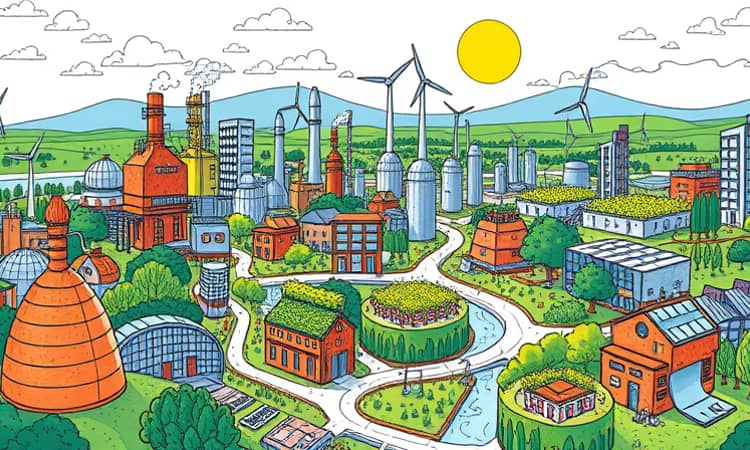
The global landscape is shifting from a linear model of “take-make-consume-throw away” to an innovative circular framework. Organizations, governments, and consumers are recognizing that waste is not an endpoint but a resource waiting to be harnessed. This transition promises to reshape industries, protect the environment, and unlock lasting value.
Definition and Core Principles
The circular economy is a production and consumption model built on sharing, leasing, reusing, repairing, refurbishing and recycling. Its goal is to extend product lifecycles and reduce waste, forming closed-loop systems that eliminate waste at every stage.
- Design out waste and pollution
- Keep products and materials in use
- Regenerate natural systems
This approach sharply contrasts with the linear economy. By embedding these three principles into product design and supply chains, businesses can achieve both economic growth and environmental stewardship.
Market Size, Growth, and Regional Trends
In 2024, the global circular economy market reached a valuation of $656.2 billion and continues to expand rapidly. Projections estimate a CAGR of 13.57% from 2025 to 2035, driving the market toward a staggering $4.5 trillion by 2030.
Despite this momentum, overall circularity remains low—only 6.9–7.2% of the world economy is circular today. However, regional analysis reveals leaders and fast followers:
- Europe: 38% market penetration, aiming to double circularity from 12% to 24% by 2030 through robust policy frameworks.
- Asia-Pacific: Fastest growth at 27%, led by China, Japan, and Singapore, driven by resource scarcity and strict regulations.
- North America: 19% adoption, steadily rising as states adopt extended producer responsibility and right-to-repair laws.
Economic, Environmental, and Social Impacts
Adopting circular strategies can deliver cost savings up to 67% for businesses, unlocking new revenue streams while lowering operational expenses. In the European Union alone, circular practices could slash 231 million tonnes of CO₂ annually in heavy industry, particularly in steel and plastics.
Beyond environmental gains, the shift creates jobs. The EU anticipates 700,000 new roles by 2030. In the Nordics, circular models could generate €48 billion per year, illustrating how waste valorization transforms into economic opportunity.
Key Drivers and Enablers
Three pillars are powering circular transformation:
- Technological Innovation: AI, robotics, blockchain, and IoT streamline material tracking, enable modular designs, and optimize end-of-life processes.
- Policy and Regulation: European ecodesign directives, China’s 60% industrial waste utilization target, and Japan’s 98% electronics recycling mandate set the stage for systemic change.
- Consumer Demand: Over two-thirds of Gen Z and millennials are willing to pay a premium for circular products, signaling a significant market shift toward sustainability.
Key Opportunities by Sector
Every industry can tap circular strategies to unlock value. Below is an overview of high-impact areas:
Innovative Business Models
Trailblazers are adopting models that embed circularity into the core of their offerings. Key frameworks include:
- Product-as-a-Service: Shifting from ownership to leasing and subscription services.
- Recommerce & Take-back: Brands like Patagonia predict over 10% of revenue from resale of used goods.
- Modular Design & Reverse Logistics: Enabling easy repair, upgrade, and material recovery.
Urban mining in Japan extracts valuable metals from discarded electronics, while rental models in medical and agricultural equipment extend asset life and optimize resource use.
Barriers and Challenges
Despite the promise, obstacles remain. Global circularity has declined from 9.1% in 2018 to under 7% today, underscoring the complexity of redesigning products, supply chains, and infrastructure.
Scaling innovations such as bioplastics and digital product passports requires investment in biomass supply chains, contamination prevention, and robust tracking systems to build trust and ensure compliance.
Global Policy Developments and Future Outlook
Policy momentum is building. The European Green Deal mandates a 24% circularity rate by 2030. In Asia Pacific, China, South Korea, and Singapore are implementing ambitious waste utilization and recycling targets.
Looking ahead, success will depend on:
- Innovation-driven design and digital tools that enable end-to-end visibility
- Regulatory frameworks and capital investment that de-risk circular ventures
- Consumer education and behavior change to drive demand for circular products
By embracing circular models, companies can build resilience against raw material price volatility, reduce carbon footprints, and generate new revenue streams. The urgency is clear: as global waste projects to hit 3.4 billion tons per year by 2050, closing the loop is not just an option—it is a necessity for a sustainable and prosperous future.
Now is the time for businesses, policymakers, and communities to collaborate. The circular economy is more than a strategy—it is a transformational lens through which we can redefine growth, respect planetary boundaries, and ensure that resources continue to serve society for generations to come.