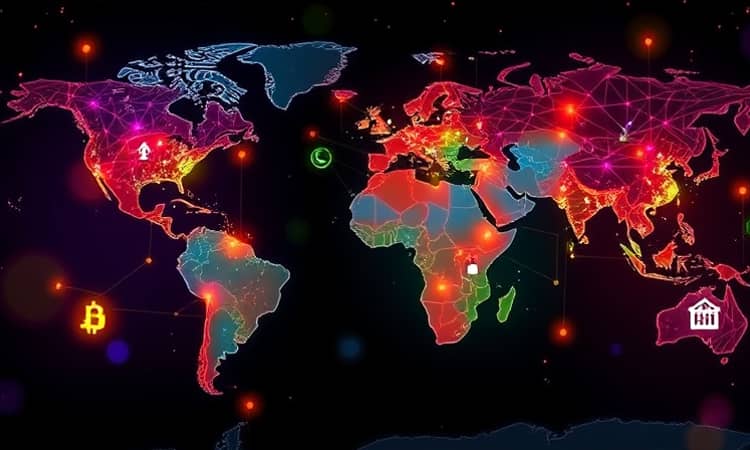
In an era marked by both cooperation and competition, global capital flows weave a complex tapestry of opportunity and risk. The world economy has demonstrated resilience amid divergent forces as surges in technology and policy shifts reshape where and how investment moves.
The Backbone of Resilience
Despite rising protectionism and fiscal strains, capital has proven remarkably adaptive. Megatrends such as slowing global trade growth and widening imbalances between regions have been offset by robust inflows into cutting-edge industries. Investors continue to seek returns in fast-growing sectors, while policy easing and targeted incentives maintain a steady stream toward emerging markets.
At the same time, the United States maintains its dominance as a financial hub, attracting portfolio and direct investment through a combination of strong institutions, scale, and dynamic innovation ecosystems. This central role persists even as trade deficits widen and supply chains fragment.
Key Statistics on Global Growth and Trade
A data-driven perspective highlights the near-term outlook for growth, trade, and inflation across regions. The following table summarizes key IMF and UN projections for 2025 through 2027:
These forecasts reveal a front-loaded rebound in trade followed by moderation, while inflation gradually trends downwards amid easing monetary conditions. Regional growth projections for 2026 underscore significant variation: the US at 2.4%, China at 4.5%–5.0%, India at 6.4%, and emerging markets around 4.0% on average.
Positive and Negative Drivers of Capital Flows
Capital flows are shaped by an interplay of supportive and restrictive forces. Understanding these drivers can help policymakers and investors navigate shifting tides.
- AI and tech investment surge: Semiconductors, cloud infrastructure, and generative AI funding boost North American and Asian inflows.
- Easing financial conditions supporting inflows: Lower borrowing costs and narrow credit spreads encourage portfolio allocations to emerging markets.
- Fiscal incentives and policy easing: Tax credits and stimulus measures in major economies revive cross-border investment.
- Trade tensions and tariffs: Protectionist measures disrupt supply chains, raise input costs, and deter some capital deployment.
- High debt burdens: Elevated sovereign and corporate leverage in developing regions heightens vulnerability to rate shocks.
- Climate and geopolitical shocks: Extreme weather events and geopolitical standoffs increase risk premia and fragment flows.
Regional Capital Flow Dynamics
North America and East Asia continue to command the lion’s share of global investment, buoyed by technological innovation and large, liquid capital markets. The US alone recorded persistent inflows into equity and debt portfolios, driven by its favourable policy framework and vibrant startup ecosystem.
In contrast, Europe faces subdued private investment amid weak domestic demand and regulatory uncertainty. Nonetheless, select sectors such as renewable energy and digital services attract steady capital.
Emerging markets saw a record $98.8 billion in inflows in January 2026, largely debt-led. Stimulus in China and fiscal reforms in India support growth rates of 4.5%–6.4%, while Middle East oil revenues and Sub-Saharan Africa’s stabilization efforts bolster local markets.
Structural Shifts and Private Credit Expansion
One of the most profound changes in the global financial landscape is the rise of private credit. With an addressable market nearing $41 trillion, private funds have begun to replace a significant share of traditional bank lending. Secondary trading reached a record $226 billion, reflecting deepening liquidity in this segment.
This trend corresponds with sovereign debt levels crossing 100% of GDP in many economies, prompting a shift toward shorter maturities and diversified funding sources. The private credit market transformation enhances resilience but also creates new interlinkages and potential vulnerabilities.
Risks and Uncertainties Ahead
The next phase of capital flows faces an array of risks. High asset valuations, particularly in the tech sector, could correct sharply if growth disappoints. Geopolitical tensions and fragmented policies further complicate cross-border investment decisions.
Imbalances persist, with US deficits financed by surpluses in China and the EU. This arrangement underpins liquidity but also harbours potential stress points if confidence falters. Policymakers must address coordination gaps to avoid a drag on global growth.
Other concerns include a roughly 35% probability of recession in 2026, currency volatility in several frontier markets, and policy uncertainty surrounding fiscal spending and regulatory reforms.
Conclusion: Navigating the Future of Investment
Amid these complex dynamics, stakeholders must remain agile. Diversification across asset classes, regions, and sectors can help mitigate localized shocks. Close monitoring of policy developments and macro indicators is essential.
By embracing innovation, adapting to new funding structures, and fostering multilateral collaboration, investors and governments can harness capital flows to drive sustainable growth. The evolving landscape of global investment patterns offers both challenges and opportunities—those who anticipate change will be best positioned to thrive.