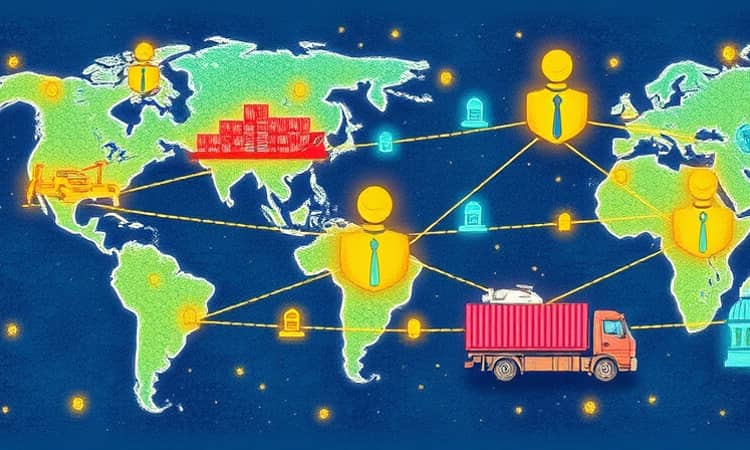
Imagine a world where every shipment, every invoice, and every financing decision flows seamlessly from point A to point Z, with no delays, no disputes, and no hidden fees. In today’s global marketplace, fragmented information and lengthy credit cycles can stifle growth for companies large and small. However, a breakthrough technology promises to change that reality: blockchain.
Understanding Supply Chain Finance
Supply Chain Finance (SCF) bridges the gap between buyers and suppliers by providing short-term credit that optimizes working capital for all parties. Traditionally, suppliers face cash-flow shortages waiting for invoices to clear, while buyers seek to extend payment terms to preserve liquidity. SCF uses mechanisms like reverse factoring and dynamic discounting to allow early payment for suppliers and extended terms for buyers.
Dynamic discounting solutions, for instance, enable buyers to pay invoices early at a negotiated discount, without the involvement of banks, offering flexible financing with direct savings for both organizations. Yet even these innovations face hurdles when data is siloed, paperwork piles up, and trust is limited.
The Promise of Blockchain
At its core, blockchain is a shared and immutable ledger accessible to approved participants. In SCF, each transaction—be it an order, shipment confirmation, or payment—becomes a new block added to the chain. Once recorded, entries cannot be altered, ensuring a single source of truth for all stakeholders.
Beyond mere record-keeping, blockchain enables automated smart contracts execute transactions when predefined conditions are met. For example, upon delivery confirmation from an IoT-enabled sensor, funds can be released instantly to the supplier or financier, cutting out manual reconciliation and accelerating cash flow.
Key Mechanisms and Benefits
By combining blockchain with IoT and digital identity platforms, financiers can monitor collateral in real time, adjust credit lines dynamically, and pre-approve invoices securely. This results in end-to-end supply chain visibility that deters fraud, duplication of invoices, and payment disputes.
Transformative Advantages
- Financial Gains: Lower insurance and financing costs lead to cost savings and reduced operational risks, inviting more lenders to participate.
- Operational Efficiency: Automated workflows eliminate delays, slash paperwork, and streamline complex multi-party agreements.
- Risk Mitigation: Cryptographic signatures and shared KYC platforms cut compliance costs and reduce fraud exposure.
- Stronger Relationships: Reliable, timely payments cultivate deeper supplier loyalty and foster sustainable partnerships.
Real-World Implementations
Several pioneering companies are already harnessing blockchain to transform SCF:
- Komgo: A consortium platform enabling banks and commodity traders to share KYC data once, reducing onboarding time from weeks to hours.
- Clipeum: A solution providing permissioned channels for confidential invoice financing, ensuring only authorized parties view sensitive details.
- TradeLens: An integration of blockchain and IoT that offers port authorities, customs agencies, and carriers a unified view of cargo movements.
These platforms demonstrate how permissioned blockchain networks ensure privacy while unlocking efficiencies that were once deemed impossible.
Overcoming Challenges and Risks
Despite its potential, blockchain adoption in SCF must address several hurdles:
- Implementation Costs: Initial setup and integration can be significant, though long-term automation gains often outweigh upfront expenses.
- Legal and Regulatory Compliance: Cross-border finance demands adherence to diverse regulations; blockchain solutions must embed robust KYC and AML protocols.
- Illicit Activity Concerns: While blockchain is transparent, it must be designed to detect and prevent sanctions evasion and crypto-based fraud. In 2025, illicit crypto volume reached $158 billion, emphasizing the need for on-chain monitoring.
Market Trends and the Road Ahead
Global interest in blockchain-based SCF is accelerating. Industry forecasts predict significant savings as middlemen are reduced and processes are digitized. By 2026, entire asset classes—from receivables to inventory financing—could be tokenized on-chain, unlocking trillions in new liquidity.
Merger and acquisition activity within fintech and blockchain firms is expected to rise as traditional banks seek to integrate best-in-class distributed ledger platforms. Adoption will also be driven by success stories demonstrating real-time data for proactive decisions, lower capital costs, and improved risk management.
Organizations that embrace this revolution will gain a competitive edge: they will enjoy faster growth, deeper supply chain partnerships, and a stronger position in an increasingly digital global economy.
Conclusion
Blockchain’s integration into supply chain finance is not merely a technological upgrade—it is a fundamental shift in how trust, credit, and collaboration operate across borders. By providing an immutable, transparent foundation for transactions, automating processes through smart contracts, and opening doors to real-time data insights, blockchain unlocks new potential for businesses of all sizes.
As we move toward 2026, the companies that lead the charge in adopting blockchain-enabled SCF will define the future of trade. They will streamline working capital, fortify supplier relationships, and create a more inclusive, resilient, and sustainable global supply network. The time to act is now—embrace the revolution and transform your supply chain finance today.