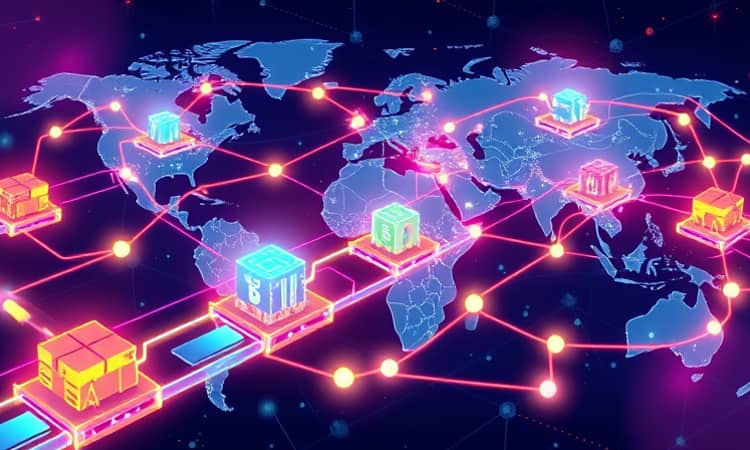
Today’s global supply chains are vast, complex, and often opaque. From raw material sourcing to final delivery, countless parties exchange goods and data, creating opportunities for delays, errors, and fraud. Blockchain technology offers a revolutionary way to record every movement and condition of products in a secure, permanent manner.
By leveraging a decentralized architecture with cryptographic security, companies can ensure that every transaction is verifiable and tamper-proof. This fosters trust among manufacturers, shippers, regulators, and consumers alike, transforming supply chains into transparent, accountable networks.
Introduction to Blockchain in Supply Chains
At its core, blockchain is a distributed digital ledger that records transactions in linked blocks. Each addition to the chain is time-stamped and validated through network consensus, ensuring an immutable record that cannot be altered without detection.
In supply chain management, this means that stakeholders share a single source of truth. Every package scanned, temperature logged, and payment processed is permanently recorded, creating end-to-end visibility from origin to consumer.
Key Benefits of Transparent Supply Chains
Blockchain implementation delivers multiple transformative advantages:
- End-to-end traceability and provenance tracking: Companies can pinpoint product origins and journeys in seconds, crucial for rapid food recall or verifying ethical sourcing in luxury goods.
- Fraud and counterfeiting reduction: Unique digital fingerprints and tamper-proof logs prevent unauthorized alterations, safeguarding brands and consumers.
- Automated processes via smart contracts: Programmable code triggers payments, customs clearance, and deliveries automatically when agreed conditions are met, eliminating paperwork and delays.
- Real-time transparency and accountability: All parties access the same data, reducing disputes, enhancing collaboration, and building stakeholder trust.
- Regulatory compliance and risk management: Auditable records simplify reporting and ensure environmental conditions—such as cold chain requirements for vaccines—are maintained and logged.
Additional features like carbon footprint tracking and supplier credential verification further enhance sustainability efforts and mitigate supply chain risks.
Technical Foundations: How It Works
Blockchain’s strength lies in its core technologies. First, immutable record that cannot be altered ensures data permanence. Once a transaction is confirmed, altering it requires consensus from the entire network, making tampering virtually impossible.
Second, the distributed ledger accessible to all removes single points of failure. Every participant maintains a synchronized copy of the ledger, ensuring transparency and resilience against outages or cyberattacks.
Third, cryptographic proof of authenticity leverages public and private key pairs to secure transactions and control access. This guarantees that only authorized entities can add or view sensitive data.
Finally, programmable smart contracts executing automatically embed business logic directly into the blockchain. These self-enforcing agreements streamline operations by triggering actions—such as releasing payments or updating inventory—without manual intervention.
Integration with IoT devices—temperature sensors, GPS trackers, and QR codes—automates real-time data capture. As goods progress through the supply chain, environmental and positional metrics are logged instantly, creating a tamper-proof audit trail.
Real-World Case Studies
Leading organizations have embraced blockchain to redefine supply chain transparency and trust:
These initiatives demonstrate how blockchain delivers measurable efficiency gains and trust across diverse sectors, from food safety to luxury goods and pharmaceuticals.
Industry Applications and Impact
Blockchain’s versatility makes it invaluable across various industries:
- Food and beverages: Rapid contamination tracing and recall management.
- Pharmaceuticals: Verifying integrity of temperature-sensitive products.
- Luxury goods: Protecting brand reputation with provenance verification.
- Apparel and textiles: Tracking fiber-to-finish supply chains for ethical sourcing.
- Logistics and shipping: Streamlining documentation and reducing transit times.
As companies prioritize environmental and social governance, blockchain-powered carbon footprint monitoring and supplier verification will drive sustainable practices and ethical compliance.
Challenges and Future Outlook
Despite its promise, blockchain adoption faces several hurdles:
- Stakeholder buy-in: Aligning diverse participants on a single platform.
- Scalability: Managing high transaction volumes without sacrificing speed.
- Interoperability: Integrating legacy systems and global standards.
Emerging solutions—such as consortium blockchains and standardized protocols—are addressing these barriers by fostering collaboration and reducing integration complexity. Layer-2 scaling technologies also promise to increase throughput while lowering transaction costs.
Over the next decade, continued innovation will enable blockchain to underpin increasingly sophisticated supply chain networks. As adoption grows, businesses will unlock new opportunities for automation, sustainability, and ethical assurance.
Conclusion: Embracing a Trustworthy Future
Blockchain is redefining supply chain management by embedding unprecedented visibility and trust into every transaction. From farm to fork, mine to market, and factory to pharmacy, organizations that harness this technology achieve greater efficiency, stronger compliance, and deeper consumer confidence.
The journey toward fully transparent supply chains is already underway. By adopting blockchain-driven solutions, businesses can ensure that every product’s story is honest, complete, and accessible—building a future where trust is truly guaranteed.