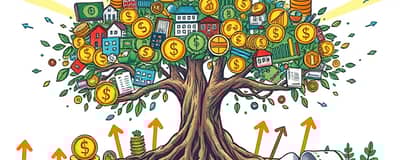
In an era marked by market highs and lows, the call to infuse finance with purpose has never been stronger. Traditional approaches that focus solely on profit margins are giving way to dynamic and contested assemblages of principles designed to reshape capital flows. Sustainable Investment Frameworks invite investors to view risks and opportunities through a lens that transcends quarterly earnings, championing a vision where portfolios drive positive change.
Reimagining Capital for a Sustainable Future
At their core, Sustainable Investment Frameworks seek to integrate environmental, social, and governance factors into every facet of decision making. Rather than treating climate change, social inequality, and governance challenges as peripheral concerns, these approaches embed them into valuation models and risk assessments. By doing so, investors position themselves to navigate systemic shifts while fueling projects that safeguard our shared planet.
As financial markets evolve, it becomes clear that environmental and social outcomes are not mere externalities but material drivers of long-term value. Embracing this truth demands a shift from static checklists to adaptive strategies that recognize the interdependence between people, planet, and profits.
Core Pillars of Sustainable Investment
Every robust framework stands on foundational pillars that guide capital toward enduring outcomes. Three principles anchor this transformation:
- Positive contribution to environmental and social objectives
- Do No Significant Harm (DNSH) across all investments
- Good governance as a strategic advantage
These pillars ensure that each allocation not only seeks financial return but also upholds ethical standards, mitigates harm, and fosters transparent, accountable practices. They create a shared language for asset managers, regulators, and beneficiaries to align expectations and measure progress.
Strategies That Drive Real Impact
Translating principles into action requires a suite of complementary strategies. From screening out unsustainable industries to engaging with companies on environmental disclosures, investors wield diverse tools to shape corporate behavior and channel capital toward solutions.
Beyond these core tactics, thematic investing targets challenges such as water scarcity, sustainable agriculture, and clean technology, while green bonds finance projects aligned with climate objectives. Investors can select vehicles from dedicated ESG funds to bespoke portfolios tailored to stakeholder values.
Navigating Challenges and Pitfalls
Despite the momentum behind responsible investing, barriers persist. Inconsistent reporting standards and data gaps create uncertainty, making it difficult to compare firms or verify impact claims. Meanwhile, systematic inclusion of ESG in analysis can be undermined by greenwashing, where superficial labels mask unsustainable practices. Overcoming these pitfalls requires rigorous due diligence and collaboration across industry bodies.
Ethical dilemmas also arise when financial returns and impact goals diverge. Balancing short-term performance with long-term societal benefit demands patience, resilience, and transparent communication with beneficiaries and stakeholders.
A Roadmap to Meaningful Implementation
Crafting a tailored framework involves clear objectives, robust processes, and ongoing evaluation. Investors can follow a structured path:
- Define sustainability goals aligned with organizational values.
- Develop criteria and thresholds for investment selection.
- Integrate ESG data into research models and risk assessments.
- Engage actively with portfolio companies on key issues.
- Monitor outcomes and recalibrate strategies based on findings.
This roadmap fosters accountability and continuous improvement, ensuring that capital deployment evolves with emerging risks and opportunities.
Measuring Success and Looking Ahead
Success in sustainable investing hinges on transparency and measurable outcomes. Adopting double materiality as a guiding principle means evaluating both how external factors affect investments and how investments affect society and the environment. Advanced frameworks leverage proprietary scoring, scenario analysis, and impact reporting to provide stakeholders with a clear view of progress.
As regulations tighten—exemplified by initiatives like the EU’s Sustainable Finance Disclosure Regulation—and data becomes more accessible, the landscape will mature. Investors who embrace these changes will help steer over $35 trillion in global sustainable assets toward resilient economies and healthy ecosystems.
Conclusion: A Shared Journey Toward Prosperity
Building Sustainable Investment Frameworks is more than a technical exercise—it is a collective endeavor rooted in purpose. By aligning financial goals with societal needs, we harness the power of capital to heal landscapes, uplift communities, and secure future generations. Every allocation represents a vote for the kind of world we wish to inhabit. Together, investors, companies, and civil society can transcend the boom-and-bust cycle, transforming markets into engines of regeneration.
Let us embark on this journey with intention, courage, and a commitment to leave a lasting legacy of prosperity for people and planet alike.