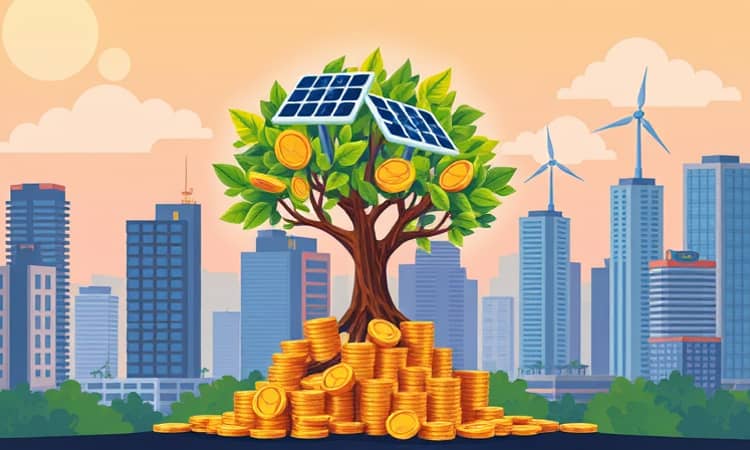
In an era of economic volatility, true financial independence requires more than chasing fleeting opportunities.
It demands a shift towards sustainable foundations that endure market cycles and societal transformations.
This article provides a detailed roadmap for 2026, blending timeless wisdom with innovative approaches to wealth building.
By embracing these strategies, you can create a portfolio that not only grows but also aligns with your values and the planet's future.
Embracing Core Wealth-Building Pillars
The journey begins with actionable strategies that compound over time, offering stability and growth.
Real estate investment provides tangible asset appreciation and reliable passive income through rentals.
Stock market engagement allows you to participate in corporate success and global economic expansion.
Cryptocurrency diversification introduces digital assets into a balanced portfolio for modern exposure.
Establishing side businesses taps into entrepreneurial spirit, creating additional revenue streams.
Leveraging financial education empowers you to make informed decisions with confidence and clarity.
Key investment vehicles include retirement accounts like 401(k)s and IRAs, which offer significant tax advantages.
Mutual funds and ETFs simplify diversification across various sectors and geographic regions.
Bonds add stability, cushioning your portfolio against market volatility with predictable returns.
- Invest in tax-advantaged retirement accounts
- Utilize ETFs for broad market exposure
- Explore bonds for income and safety
Crafting a Diversified and Resilient Portfolio
Diversification is your shield against unforeseen risks and market downturns.
Allocating investments across stocks, bonds, real estate, and alternatives minimizes exposure to any single failure.
Within equities, mix large-cap stability with small-cap growth potential for optimal balance.
Building resilience involves both financial preparedness and mental fortitude.
- Save three to six months of expenses in an emergency fund
- Develop stress-management techniques to avoid impulsive decisions
- Maintain a long-term vision to ride out market cycles
- Hold strategic cash reserves for opportunistic investments
Mastering Tax-Efficient Investment Techniques
Tax efficiency can dramatically enhance your net returns over decades.
Invest in tax-deferred accounts to let your money grow untaxed until retirement.
Employ tax-loss harvesting to offset capital gains and reduce annual liabilities.
Consult professionals for tailored strategies that maximize after-tax income and wealth accumulation.
- Maximize contributions to IRAs annually
- Harvest losses during market downturns
- Seek expert advice for complex situations
Generating Sustainable Passive Income Streams
Passive income liberates your time and provides financial security without constant effort.
Align passive sources with personal passions and goals for enduring motivation and satisfaction.
Real estate rentals offer monthly cash flow and long-term property appreciation.
Digital products, like e-books or online courses, can generate revenue for years with minimal upkeep.
Dividend stocks provide regular payouts from profitable, established companies.
- Purchase rental properties in growing urban areas
- Create online content that solves common problems
- Build a portfolio of blue-chip dividend payers
Foundational Lifestyle Habits for Wealth Accumulation
Wealth is as much about behavior and mindset as it is about financial instruments.
Frugality teaches the art of saving more and spending less on non-essentials.
Minimalism encourages a clutter-free life focused on experiences over material possessions.
Mindful spending involves questioning every purchase for its true value and necessity.
Frugality and discipline transform income into investable capital steadily over time.
Practical steps include tracking expenses meticulously, cutting unnecessary subscriptions, and hunting for discounts.
Integrating ESG into Your Investment Philosophy
Environmental, Social, and Governance (ESG) investing is reshaping the financial landscape.
ESG criteria prioritize ethical and sustainable corporate practices across industries.
In 2026, consumers and investors alike demand greater accountability and transparency from companies.
Benefits include enhanced long-term financial performance and alignment with personal ethics.
- Select mutual funds with high ESG ratings
- Avoid industries with poor environmental records
- Support companies with strong social initiatives
Focusing on Climate-Action Investment Strategies
Climate change presents both risks and opportunities for forward-thinking investors.
Three primary strategies are green bonds, decarbonisation, and climate and nature solutions.
Green bonds finance projects like renewable energy, offering stable returns and portfolio diversification.
Decarbonisation reduces your portfolio's carbon footprint through selective investing in low-carbon equities.
Climate solutions invest in technologies that mitigate environmental impact, such as clean energy.
Exploring Private Capital in Sustainable Sectors
Private markets offer unique opportunities for growth and positive impact.
Sustainability-themed private equity targets efficient solutions in areas like waste management.
Private credit provides debt financing for companies driving the energy transition, with attractive risk-return profiles.
Growth sectors include circular economy innovations and advanced water management technologies.
Leveraging Regional Growth in Asia Pacific
Asia Pacific is a hotspot for sustainable investing, with rapid adoption and innovation.
80% of asset owners anticipate growth in sustainable funds, highlighting strong regional demand.
Record sustainable debt issuance in 2025 underscores the region's commitment to green finance.
Harnessing Technology for Smarter Investing
Technological advancements democratize access to wealth-building tools and strategies.
Blockchain enhances transparency in transactions and asset ownership, reducing fraud risks.
Artificial Intelligence analyzes vast datasets for better investment decisions and trend predictions.
Fintech apps automate savings and portfolio rebalancing, making management effortless.
Automation makes investing accessible for everyone, lowering barriers to entry and simplifying processes.
Use robo-advisors for hands-off management of diversified, tailored portfolios.
Protecting Wealth Against Inflation
Inflation erodes purchasing power, making proactive hedging essential for wealth preservation.
Invest in assets like real estate that historically appreciate faster than inflation rates.
Commodities, such as gold, retain value during economic uncertainty and currency fluctuations.
Inflation-linked bonds adjust payouts based on inflation, providing a reliable hedge.
- Allocate to real estate investment trusts (REITs)
- Diversify with commodity ETFs for raw material exposure
- Include Treasury Inflation-Protected Securities (TIPS)
Committing to Continuous Learning and Adaptation
The financial landscape evolves constantly, requiring lifelong education and flexibility.
Invest in courses and workshops to expand your knowledge on emerging trends and tools.
Network with experts and peers to gain insights and uncover new opportunities.
Stay updated on market shifts and regulatory changes to adjust strategies proactively.
Adaptation is the next growth market in investing, offering both real-world impact and competitive returns.
Catalysts like favorable green policies and improved data transparency accelerate sustainable adoption.
In conclusion, building wealth through sustainable foundations is a holistic journey of intentional choices.
By integrating these strategies, you create a portfolio that not only grows financially but also contributes positively to society.
Start today, lay your foundations with care, and watch your wealth flourish for generations to come, grounded in resilience and purpose.