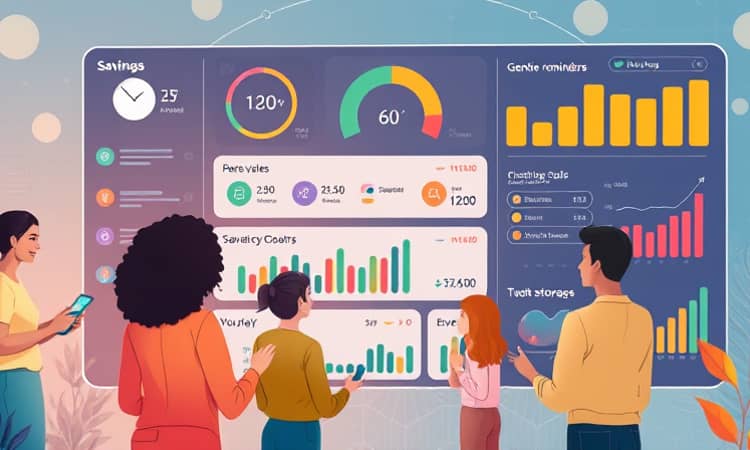
In the evolving landscape of digital finance, users face countless choices and complex interfaces. FinTech firms now harness insights from behavioral economics to guide individuals toward more responsible money management. These subtle interventions, known as nudges, empower users to save more, reduce debt, and engage with financial products in healthier ways.
Inspired by pioneers such as Richard Thaler and Cass Sunstein, subtle shifts in digital choice architecture delicately shift decision frames without stripping away freedom of choice. By understanding human biases like present bias and loss aversion, digital platforms create intuitive support mechanisms that ease the path toward financial wellness.
In recent years, digital wallets, mobile lending platforms, and robo-advisors have democratized access to financial services. Yet many users still struggle to develop consistent saving and investment habits. The invisible hand of behavioral design offers a bridge, helping people form routines that might otherwise feel daunting or boring.
Behavioral nudges do not rely on heavy-handed restrictions or financial penalties. Instead they harness human nature, transforming digital experiences into supportive guides that anticipate needs and reduce decision overload.
Core Behavioral Economics Concepts
At the heart of effective nudging lies a deep appreciation for the cognitive shortcuts and emotional triggers that shape our choices. Financial behaviors often stem from mental patterns formed over years of socialization and individual experiences.
Beyond individual biases, broader psychological factors such as financial socialization—how early money experiences shape adult behaviors—play a vital role. Anxiety around money, perceived barriers to saving, and an individual’s planning horizon all influence responsiveness to nudges.
FinTech applications routinely target the following biases:
- Favoring immediate rewards over long-term gains (present bias).
- Sticking with default options by habit (status quo bias).
- Reacting more to potential losses than gains (loss aversion).
- Following peers to validate financial choices (social proof).
- Delaying tasks that feel overly complex (procrastination).
- Separating money into mental spending buckets (mental accounting).
By acknowledging these tendencies, FinTech platforms craft experiences that reduce friction, highlight future benefits, and leverage communal momentum.
Nudge Applications Across User Journeys
Behavioral nudges can be integrated at every stage of the user’s interaction with a financial product. From seamless onboarding to long-term engagement, each touchpoint offers an opportunity to encourage positive action in an unobtrusive manner.
Below are common applications of nudges along the customer lifecycle:
- Gentle reminders to complete onboarding promptly (onboarding and activation).
- Automated savings rules that build daily habits (habit formation).
- Contextual offers to renew policies early (cross-selling and upselling).
- Customized notifications to reengage inactive users (retention and loyalty).
When these nudges are timed to coincide with behavioral triggers—such as paydays, calendar milestones, or fresh-start moments—they gain amplified effectiveness, steering users toward consistent engagement.
Designing Effective Nudges
Crafting a powerful nudge demands attention to both psychological theory and practical execution. Designers must ensure that each intervention is ethically sound and respects user autonomy.
Key principles include:
- Preselecting automatic transfers at optimal rates (default settings).
- Breaking complex tasks into simple steps (simplification).
- Delivering prompts at moments of peak motivation (timeliness).
- Tailoring messages based on individual goals (personalization).
- Highlighting community progress as social proof (social comparison).
Continuous testing through A/B experiments and statistical models ensures nudges remain relevant, unobtrusive, and impactful over time.
Measuring Impact and Outcomes
To validate the effectiveness of behavioral nudges, FinTech companies rely on rigorous data analysis. Metrics may include activation rates for new features, frequency of savings contributions, reduction in late payments, and increases in product cross-sales.
For example, a study of a leading savings app showed a 35% increase in weekly deposits after introducing SMS reminders with peer comparison cues. Another financial institution reduced late payment fees by 22% when they implemented calendar-linked bill alerts.
Statistical tools such as regression analysis and structural equation modeling link demographic factors and psychological traits to financial outcomes. This enables teams to refine interventions, scale successful tactics, and identify new opportunities for user support.
Challenges and Future Directions
While behavioral nudges unlock new possibilities, they also present challenges related to personalization, ethics, and long-term efficacy.
- Data privacy concerns demand transparent opt-in mechanisms.
- User fatigue can arise from excessive notifications.
- Heterogeneous needs require advanced segmentation.
- Ethical considerations necessitate clear boundaries.
Ethical deployment also requires monitoring for unintended consequences. Nudges that focus solely on short-term gains may overlook long-term resilience. Teams should balance immediate engagement metrics with measures of overall financial health, such as debt-to-income ratio and emergency fund adequacy.
Looking ahead, the integration of AI-driven personalization promises to deliver hyper-relevant nudges that evolve with each user’s financial journey. Emerging areas include embedding mental health support for financial anxiety and expanding inclusive designs for underbanked communities.
Practical Tips for Developers and Product Teams
When building or refining FinTech experiences, teams can apply the following practical steps:
Start with user research. Map customer pain points and identify moments of decision friction. Gather qualitative feedback alongside quantitative metrics to inform your hypotheses.
Collaborate across disciplines. Behavioral scientists, data analysts, UX designers, and compliance experts all contribute unique perspectives. Cross-functional workshops can spark innovative nudge ideas that are both user-friendly and compliant with regulations.
Prototype and test rapidly. Deploy small-scale experiments to validate assumptions about nudge timing, messaging tone, and visual cues. Iterate based on real user behavior.
Ensure ethical deployment. Offer clear information about data usage, provide easy ways to adjust nudge settings, and respect user autonomy at all times.
Document lessons learned. Create a repository of nudge experiments, outcomes, and user feedback. This living handbook can guide future initiatives and fuel continuous improvement.
Embracing a Behavioral Mindset
Behavioral nudges in FinTech represent more than a set of tactics; they embody a mindset that centers empathy, user empowerment, and evidence-based design. By weaving these principles into every layer of a digital financial service, organizations can foster lasting financial well-being and build trust that endures through economic cycles.
By championing behavioral design and continuously refining strategies, FinTech innovators can set new standards for user-centric financial services. The journey toward widespread financial empowerment begins one thoughtful nudge at a time.