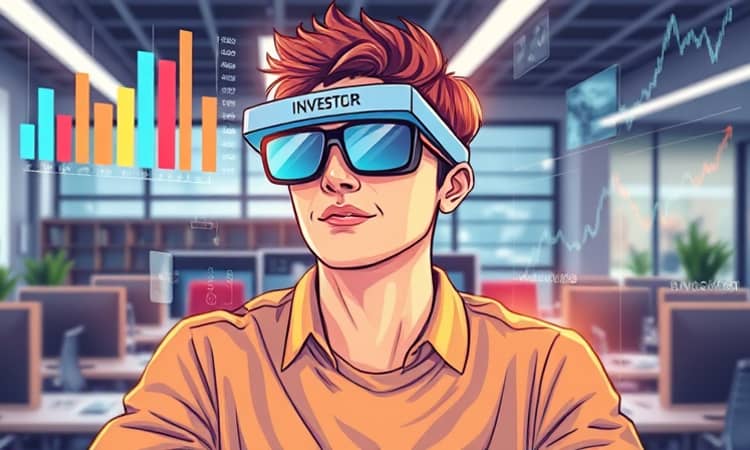
In an age where data is abundant but understanding can lag, the financial world seeks tools that bridge complexity and clarity. Augmented Reality (AR) is that bridge, offering complex financial concepts at scale in intuitive, visual formats. From advisors guiding clients through retirement plans to traders analyzing market swings, AR is unlocking new dimensions of insight.
This article explores how AR is reshaping every facet of finance—data visualization, trading, banking, advisory services—and lays out practical steps for institutions ready to embrace this transformative technology.
What is Augmented Reality and Why It Matters
At its core, AR overlays digital content onto the real world in real time. Unlike Virtual Reality, which transports users into fully simulated environments, AR enhances our existing surroundings with interactive, contextual information. When integrated into finance, AR turns spreadsheets, balance sheets, and complex models into immersive experiences.
With interactive digital overlays in real time, users can view account balances as 3D charts hovering above their desk or inspect a portfolio’s risk profile mapped onto a tabletop globe. It moves data from flat screens into the physical space where decisions are made.
Revolutionizing Data Visualization
Traditional graphs and tables may suffice for experts, but many clients crave deeper engagement. AR transforms static charts into dynamic, manipulable objects. Users can walk around a bar chart, zoom into spending patterns, or highlight anomalies with a simple gesture.
- Westpac New Zealand’s banking app displays spending habits as floating 3D bars, making budgets more tangible.
- Wealth managers project asset allocations onto conference tables, allowing clients to explore various scenarios.
- Real estate investors overlay neighborhood price trends on a street view during site visits.
These capabilities drive immersive 3D financial dashboards that boost comprehension and empower more confident decision-making.
Virtual Trading and Account Management
AR-enabled trading desks are emerging as powerful hubs where market data, analytics, and collaborative tools coexist in a shared physical environment. Traders can arrange multiple screens of live data around them without bulky monitors, and executives can review performance metrics as holographic displays.
For everyday users, AR simplifies banking tasks. Imagine pointing your phone at a paper statement and seeing interactive expense breakdowns appear in front of you. Loan comparisons, interest rate simulations, and application guidance can all be delivered via intuitive overlays.
By offering real-time market data overlays on top of personal workflows, institutions foster faster, smarter interactions with clients and internal teams alike.
Transforming Advisory Services
Financial advisors have always relied on clear visuals to explain complex strategies. AR takes that to a new level by superimposing performance forecasts, risk assessments, and retirement timelines directly onto objects in the room. Clients can see their projected nest egg rising above a coffee table or understand diversification through rotating 3D pie charts.
These tools encourage deep client engagement and understanding, building trust and reducing misunderstanding. In one pilot program, advisors reported consultation times decreasing by 20%, while client satisfaction scores soared.
This table highlights the accelerating adoption and the potential for AR to become a cornerstone of client interactions in the near future.
Benefits for Customers, Advisors, and Institutions
- Enhanced customer experience through intuitive, interactive tools.
- Improved advisory effectiveness by clarifying complex concepts.
- Streamlined operations with faster data access and decision-making.
- Competitive differentiation that attracts tech-forward clients.
By delivering immersive portfolio reviews and analysis, financial firms can foster stronger relationships and unlock new revenue streams.
Overcoming Implementation Challenges
Despite the promise of AR, adoption faces hurdles. Development costs for high-quality AR experiences remain significant, and not all customers have access to compatible hardware. Data privacy and security also demand rigorous attention when overlays carry sensitive information.
Institutions should address these barriers by investing in scalable platforms, partnering with technology vendors for hardware solutions, and enforcing stringent data security protocols that protect user information at every layer.
The Road Ahead: Future of Immersive Finance
As 5G, AI, and wearable devices continue to mature, AR will become more accessible and powerful. We can expect fully immersive virtual branches, gesture-driven scenario simulations, and AI-powered guidance integrated seamlessly into everyday financial tasks.
Looking forward, the industry will see a seamless integration of AI and AR, where predictive analytics inform real-world interfaces and decision support appears exactly when needed.
Strategic Recommendations for Financial Institutions
- Prioritize pilot projects that address high-impact use cases and demonstrate quick wins.
- Build cross-functional teams combining finance experts, AR developers, and UX designers.
- Invest in secure, scalable infrastructure that supports evolving hardware and software needs.
- Engage customers early through beta programs to refine features and ensure adoption.
- Monitor emerging trends in AI, blockchain, and wearable technology to stay ahead of the curve.
By choosing to prioritize user-centric design principles and fostering a culture of innovation, institutions will not only survive but thrive in the immersive financial landscape of tomorrow.
Augmented Reality is more than a novelty—it is a catalyst for a more transparent, engaging, and efficient financial ecosystem. The journey to full adoption will demand vision, collaboration, and strategic investment. But for those ready to take the leap, the rewards include deeper customer loyalty, sharper insights, and a transformative edge in an increasingly competitive market.