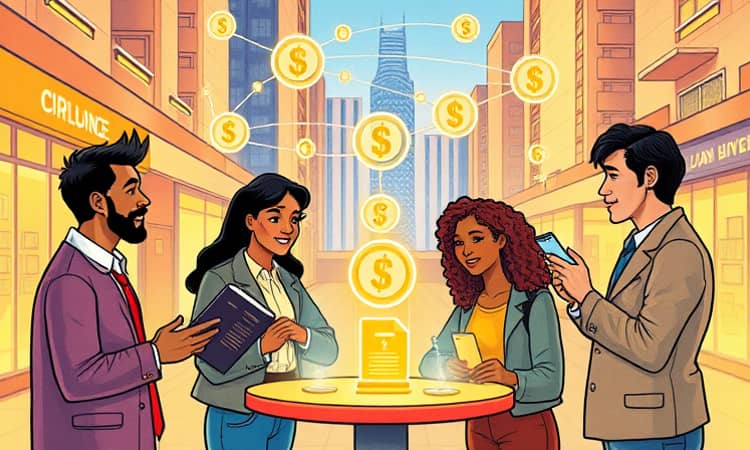
Alternative lending has emerged as a transformative force outside traditional banking institutions, offering borrowers and investors new pathways to secure and deploy capital. This shift is powered by digital innovation and shifting market demands, redefining how loans are originated, funded, and serviced across the globe.
By harnessing online platforms, technology, and data-driven approaches, alternative lenders bridge the gap for applicants who may be underserved or overlooked by conventional banks. As the sector grows, its blend of speed, flexibility, and inclusivity signals a profound evolution within the financial ecosystem.
What is Alternative Lending?
Alternative lending encompasses any financing solution that operates beyond the scope of traditional banking. Originating in the early 2000s as peer-to-peer platforms, it has expanded into a multi-faceted industry. Market participants range from individual investors funding personal loans to sophisticated fintech firms underwriting small business financing.
This landscape includes models such as marketplace lending, crowdfunding, revenue-based financing, embedded finance, and invoice factoring. Each model is designed to directly connect borrowers with investors online, removing layers of bureaucracy and enabling faster capital deployment.
Key Models of Alternative Lending
A diverse array of non-bank lending structures has gained traction in recent years. These models address specific needs, risk profiles, and repayment preferences for both individuals and businesses.
- Peer-to-Peer (P2P) Lending: Borrowers apply via online platforms, and individual or institutional investors fund slices of the loan; terms range from unsecured personal credits to secured business financing.
- Revenue-Based Financing: Companies receive advances against future sales, repaying lenders a fixed percentage of monthly revenues until the advance plus fees is satisfied.
- Crowdfunding (Equity, Debt, Reward): Startups and creative projects tap large pools of individual backers, offering equity stakes, debt repayment, or non-monetary rewards for support.
- Embedded Lending and BNPL: Financing options integrated directly at point-of-sale, letting consumers or businesses split payments over time without traditional loan applications.
- Invoice Factoring and Supply Chain Finance: Fintechs advance funds against outstanding invoices, improving cash flow for small and mid-size enterprises without bank delays.
Advantages Over Traditional Banks
Alternative lending platforms offer compelling benefits, particularly for underserved segments that face hurdles in the conventional credit landscape. These advantages often translate to enhanced access and better-aligned financial solutions.
- Speed and Accessibility: Digital onboarding enables faster application, approval, and disbursement of funds compared to legacy banking processes.
- Flexible Underwriting: Credit decisions leverage real-time business metrics or alternative data sources, reducing reliance on long-term credit history.
- Innovative Repayment Models: Structures like revenue-share agreements or staggered BNPL installments adapt to fluctuating cash flows.
- Wider Inclusivity: Platforms can reach entrepreneurs and consumers with thin or no credit files, promoting wider inclusivity for underserved segments.
- Automation and Transparency: Digital dashboards and clear fee disclosures build trust and streamline servicing.
Market Size and Growth Trends
The alternative lending sector has witnessed exponential growth driven by consumer demand, technological advances, and institutional interest. From a niche startup arena, it has expanded into a multi-hundred-billion-dollar global market.
Regional dynamics further illustrate this growth: North America leads with roughly 30.4% market share, Asia-Pacific accelerates at a 24% CAGR, and Europe advances at over 20% in key markets such as the UK and Germany. Institutional investors are increasingly participating, funding large loan volumes alongside retail backers.
Challenges and Risks
Despite its rapid ascent, alternative lending faces hurdles that demand strategic management. Platforms must maintain rigorous credit modeling, robust cybersecurity, and proactive regulatory engagement to sustain momentum.
Key risks include higher default probabilities in unsecured segments, potential fraud, and evolving compliance requirements. Platform shutdowns during economic downturns highlight the importance of liquidity buffers and prudent portfolio diversification.
Technological Innovations Shaping the Sector
Tech-enabled tools underpin the platform evolution, enabling lenders to refine risk evaluation, personalize offers, and integrate seamlessly with client systems.
Advancements such as AI-driven credit scoring, integration with accounting, ERP, and e-commerce platforms, and blockchain-based identity verification are redefining underwriting and servicing capabilities. Meanwhile, ESG-linked lending products and real-time analytics create new value propositions for socially conscious borrowers and investors alike.
Future Outlook
As alternative lending continues to mature, strategic partnerships, regulatory clarity, and technological refinement will dictate its trajectory. Collaboration between fintech innovators and incumbent banks is increasingly common, blending agility with scale.
- Expansion of embedded finance within digital ecosystems, offering financing at the point of need
- Growth in sustainability-linked fintech loans gaining traction to support green initiatives
- Enhanced personalization through behavioral data and expanded open banking frameworks
- Strengthened regulatory frameworks balancing innovation with consumer protection
Conclusion
Alternative lending has transcended its origins as a boutique financing option to become a cornerstone of modern credit markets. By championing speed, flexibility, and inclusivity, it challenges the status quo and redefines expectations for borrowers and investors alike.
With continued innovation and thoughtful governance, this sector holds the promise of broadening financial access, driving economic growth, and ushering in a new era of digitally empowered lending.