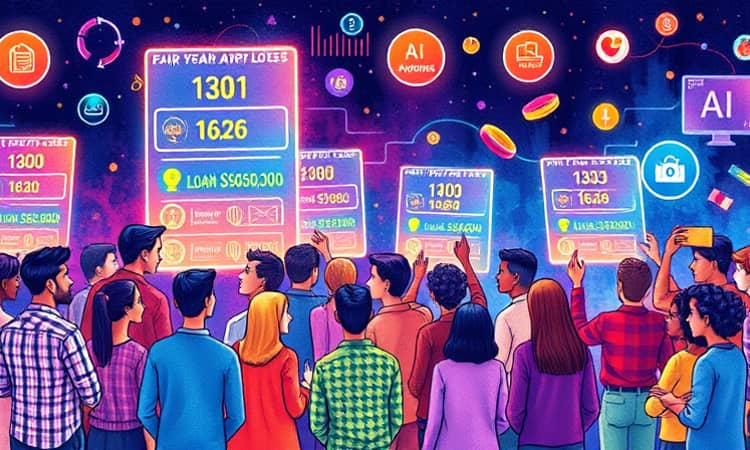
In today’s rapidly evolving financial landscape, credit decisions must balance speed, accuracy, and fairness. Traditional models often leave many underserved applicants in limbo, while rigid rules struggle to adapt to real-time changes. A new era has dawned: one powered by artificial intelligence. By harnessing vast data streams and advanced algorithms, lenders can make 3x faster decisions with approvals that expand access to credit without compromising risk management.
The Evolution of Credit Scoring
Historically, credit assessments relied on limited data—credit reports, income statements, and banking details. Static scorecards used fixed weightings, failing to capture complex customer behaviors or adapt to market shifts. Manual reviews consumed days or weeks, frustrating applicants and increasing operational costs.
Enter AI-driven credit scoring. Leveraging machine learning, neural networks, and real-time analytics, these systems transform disparate signals into actionable insights almost instantly. The result is a continuous model training and validation cycle that sharpens predictive power and remains attuned to emerging risks.
Key Performance Metrics
Concrete results demonstrate AI’s superiority over legacy approaches. Lenders adopting AI-driven scoring report:
How AI Credit Scoring Works
At its core, AI-driven scoring synthesizes vast data sources, identifies patterns, and generates dynamic risk assessments. The process unfolds in three stages: data collection, model training, and live scoring.
Real-time data integration allows systems to capture credit-relevant signals as they occur, ensuring decisions reflect current behaviors rather than stale histories.
- Traditional data: credit reports, transaction history, income statements
- Alternative data: social media behavior, e-commerce activity, utility payments
- Behavioral signals: device usage, geolocation, editing patterns
Once assembled, these data feed into machine learning pipelines. Decision trees, gradient boosting, and deep neural networks learn from millions of past applications. The outcome: a credit score accompanied by tailored recommendations on loan amounts, interest rates, and risk controls.
Advantages Over Traditional Methods
AI-driven scoring delivers transformative benefits for both lenders and borrowers. It automates decisioning, reduces bias, and adapts to economic shifts with unprecedented agility. Organizations report dramatically improved portfolio health and user satisfaction.
- Broader credit access for underserved individuals with thin credit files
- Reduced manual review workload, cutting operational costs
- Enhanced risk management through continuous monitoring
- Improved customer experience with instant outcomes
Ensuring Fairness and Combating Bias
While AI offers inclusivity, it can inadvertently perpetuate biases if left unchecked. Ethical design is paramount. Lenders must implement rigorous bias testing protocols, document model decisions, and ensure explainability. Explainable AI fosters stakeholder trust by revealing key factors driving each score and allowing applicants to understand—and improve—their creditworthiness.
Regular audits, transparent governance, and diverse training data are essential safeguards. Regulatory bodies increasingly demand accountability, pushing institutions to adopt fair lending standards aligned with AI ethics frameworks.
Industry Applications and Impact
AI-driven credit scoring extends far beyond retail lending. In commercial finance, dynamic risk assessments help businesses secure lines of credit tailored to real-time cash flows. B2B platforms leverage AI to manage trade credit, optimizing limits based on predictive models.
Digital commerce ecosystems embed instant scoring at checkout, offering microloans or buy-now-pay-later options without friction. The result is higher conversion rates and improved customer loyalty.
Implementation Considerations
Successful adoption demands both technological and organizational alignment. Key requirements include:
- High-quality historical transaction data and ongoing behavioral signals
- API-driven integration with core banking or lending platforms
- Robust data security and privacy controls to protect sensitive information
Moreover, institutions must invest in talent skilled in data science, model governance, and compliance. Cross-functional teams ensure scoring engines align with risk appetite and regulatory mandates. Effective project management and stakeholder engagement accelerate time to value and foster a culture of continuous improvement.
Future Trends
The trajectory of AI-driven credit scoring points toward ever-greater personalization and speed. Expect innovations such as:
- Continuous learning systems that self-tune based on new data
- Increased use of unstructured data—voice, video, IoT signals—for richer profiles
- Enhanced explainability techniques powered by advanced XAI frameworks
These advances promise a financial ecosystem where credit flows more equitably, risk is managed proactively, and decisions occur in the blink of an eye.
AI-driven credit scoring is not merely a technological upgrade—it is a paradigm shift. By combining alternative data for fairer assessments with rigorous oversight and transparent practices, lenders can unlock new markets, deepen customer relationships, and build healthier portfolios. The future of credit is fairer, faster, and more responsive than ever before.