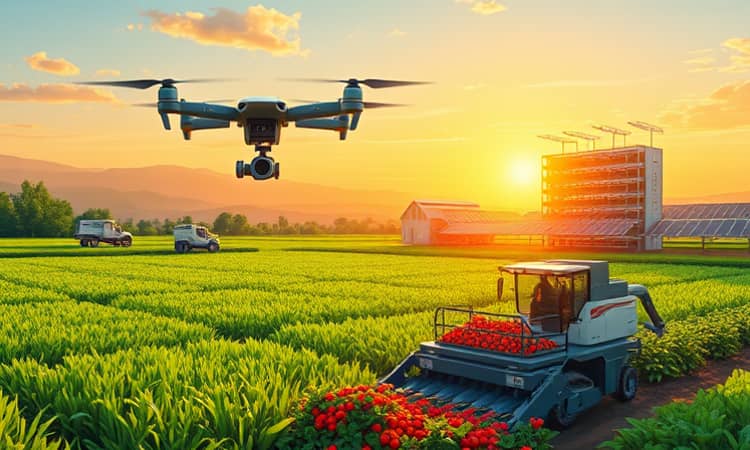
As the global population surges toward 10 billion by 2050, the pressure on food systems has never been greater. Traditional farming alone cannot meet the rising demand without risking environmental collapse or depleting precious resources. Precision farming via AI, robotics, and biotechnology offer a path forward—enabling higher yields, reduced waste, and sustainable growth. This article explores how cutting-edge AgTech innovations are shaping the future of agriculture, attracting record investments, and driving policy shifts to ensure global food security.
The Urgent Need: Population, Climate, and Resource Challenges
With farmland scarce and water tables falling, agriculture faces a trilemma: produce more food, preserve ecosystems, and adapt to climate extremes. By 2050, food output must grow by at least 60%—and yield declines of up to 18% in parts of Africa loom if no action is taken. AI-powered farming can forecast weather disruptions, detect disease outbreaks, and optimize inputs, bridging yield gaps without expanding acreage.
Meanwhile, water scarcity afflicts two-thirds of the world’s population. Precision irrigation systems, driven by sensor networks and satellite data, claim up to 40% water savings while boosting productivity by 15–30%. Combined with drought-resistant seeds, these advances can stabilize output in the face of erratic rainfall.
The Tech Revolution in the Fields: Key Innovations and Adoption
The agricultural landscape is being transformed by six core technologies, each offering unique benefits and adoption challenges. Farms worldwide are beginning to integrate these tools, reshaping labor dynamics and resource management.
- Artificial Intelligence & Machine Learning: Yield improvements of up to 30% by 2025 through predictive analytics and real-time decision support.
- Automation & Robotics: Autonomous tractors, robotic harvesters, and drone-based spraying systems mitigate labor shortages and improve consistency.
- Data-Driven Precision Agriculture: Sensors, drones, and satellites deliver targeted inputs and monitor crop health to reduce waste.
- Biotechnology & Genomics: Gene-edited seeds offer 10–20% higher yields and greater resilience against pests and drought.
- Controlled Environment Agriculture & Vertical Farming: Urban CEA sites grow 20× more lettuce per square meter using minimal water.
- Blockchain & Traceability: Supply chain transparency projects fraud reduction and ensures food safety.
Key Numbers & Comparative Data
Funding and Investing in the Future of Food
Global investment in AgTech soared to $18.2 billion in 2021, growing at a 38% CAGR since 2013. Venture capital, public-private partnerships, and development banks are channeling funds into climate-smart innovations that promise measurable returns. Every extra $5.5 billion annually in agricultural R&D could generate over $2 trillion in benefits by 2050—boosting output by 10% and cutting food prices by 16%.
Investors are increasingly drawn to startups focused on alternative proteins, regenerative solutions, and digital platforms that empower smallholders. Decentralized, consumer-driven supply chains backed by blockchain traceability are unlocking new market opportunities and fostering trust across borders.
The Sustainability Imperative: Environmental Footprint and Regenerative Solutions
Modern agriculture must deliver more while conserving the planet. Precision inputs and biotech seeds can reduce water, fertilizer, and pesticide use by up to 40%, cutting greenhouse gas emissions in parallel. Regenerative practices—crop rotation, cover cropping, reduced tillage—enhance soil health, sequester carbon, and boost biodiversity on working lands.
Digital tools now track soil organic carbon, moisture levels, and biodiversity metrics, aligning farm management with emerging sustainability frameworks. By minimizing waste and optimizing logistics, we can address postharvest losses that account for over 30% of global production in developing regions.
Skills, Inclusion, and Social Transformation in Agriculture
Technology alone cannot solve systemic challenges. Farmers need training, accessible financing, and digital infrastructure to adopt new tools. Ensuring equitable access to AgTech is vital to prevent a widening divide between large-scale operations and smallholders.
- Upskilling programs taught by equipment dealers and NGOs build capacity on the ground.
- Digital marketplaces and mobile platforms connect women and youth to global buyers.
- Microfinance and leasing models lower barriers to acquiring drones, sensors, and automated machinery.
Barriers to Adoption and How to Overcome Them
High upfront costs, data privacy concerns, and tech resilience under variable conditions remain hurdles. Solutions include public incentives, low-interest credit lines, and open-source data platforms that reduce vendor lock-in. Collaborative research partnerships can tailor innovations to diverse agroecological contexts.
The Path Forward: Integrating Technology and Policy for Global Food Security
A synchronized approach is essential: governments must align policies with innovation roadmaps, offering subsidies for sustainable practices and regulatory clarity for new technologies. Multi-stakeholder coalitions—spanning industry, academia, and civil society—can ensure that investments deliver inclusive, long-term impacts.
By harnessing the power of AI, robotics, biotechnology, and data-driven management within a supportive policy environment, we can achieve a resilient, equitable food system that feeds the world and funds the future for generations to come.